A Time Traveler's Guide to Occupied Tokyo, 1946
Tokyo in 1946 is a city of ash and black markets under American occupation. Here is your practical guide to surviving and navigating postwar Japan's strangest year.
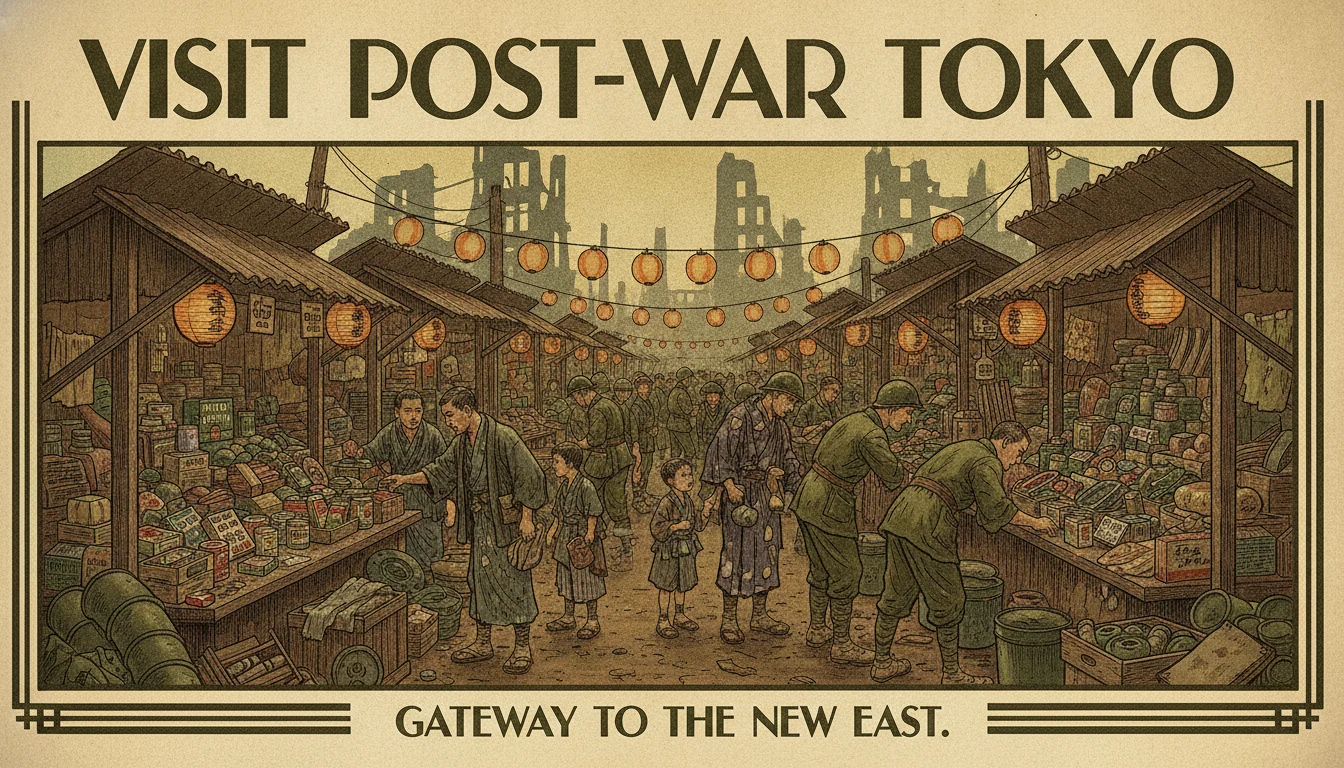
Japan surrendered on August 15, 1945. By August 30, General Douglas MacArthur had landed at Atsugi airfield and taken up residence in the Grand Hotel in Yokohama. Within weeks, his headquarters had moved to the Dai-ichi Life Insurance Building in Tokyo's Marunouchi district, directly across a wide moat from the Imperial Palace. That arrangement was not accidental. The supreme commander of the Allied Occupation sat in full view of the emperor he now outranked.
Tokyo in 1946 is the most surreal city on the planet. It is simultaneously a ruin, a construction site, a social experiment, and a surviving organism trying to figure out what it is now. Roughly 65 percent of the city was destroyed by American firebombing between 1944 and 1945. The residents who are still there are living in what can generously be called improvised circumstances. And yet the city is moving, rebuilding, trading, laughing when it can, and absorbing one of the most sweeping political transformations any society has ever been asked to accept in peacetime.
Here is your practical guide to visiting it.
First, understand what you're entering
This is not a tourist destination. Civilian foreigners are extraordinarily rare in Tokyo in 1946. Japan is a closed military occupation. Access requires, officially, authorization from SCAP. Your best cover is as an American journalist, relief worker, or attached civilian connected to the Occupation administration. If you are European or Commonwealth, a corresponding press credential from an Allied nation will do. If you are Japanese-speaking and Japanese-appearing, the situation is considerably more complicated, as you will be asked to account for yourself by both Japanese civilians and American MPs.
The first thing you notice is the smell: ash, damp timber, cooking charcoal, and the particular odor of a city that was recently on fire and has not had the means to fully clean up. Wide stretches of the old city are open ground now, the rubble cleared or flattened, wooden shacks and improvised housing occupying what were once dense residential neighborhoods.
The second thing you notice is the American military. It is everywhere. Jeeps move through intersections. MPs patrol the Ginza. Soldiers cluster around the improvised PX shops and entertainment facilities that the Occupation has set up for its personnel. The contrast between the American uniforms and the worn, patched clothing of the Japanese civilians is the visual grammar of the city in 1946.
Dress and cover
If you are presenting as an American civilian attached to the Occupation, the standard civilian clothing of the mid-1940s applies: a business suit or sport jacket and trousers for men, a skirt-suit or dress for women. Nothing flashy, nothing obviously postwar in cut. American surplus clothing moves quickly through the black market, so your clothing is less remarked upon than you might expect.
If you want to move more freely through Japanese neighborhoods without being immediately identifiable as foreign, a Japanese workman's or laborer's outfit - dark trousers, a plain dark jacket, a cloth cap - is your option. You will still not pass as Japanese without fluent language skills, but you will attract less immediate attention than in Western clothing.
Carry cigarettes. Always. American cigarettes are the secondary currency of 1946 Tokyo. A pack of Lucky Strikes can get you a meal, a ride, a room, an introduction. Japanese cigarettes exist but are rationed; American ones are preferred. Even if you do not smoke, cigarettes are your most practical universal exchange medium.
Getting around
The Tokyo streetcar system is partially operational. Some lines have been repaired since the firebombing; others remain suspended. The trains connecting Tokyo to Yokohama and other cities are running, overcrowded and sometimes unreliable, but running. You can ride them as a civilian connected to the Occupation without significant difficulty.
Do not arrive expecting a taxi in the Western sense. There are very few private cars operating for civilian use. What does exist is a range of improvised transport: bicycle-pulled rickshaws, hand carts, and, in the American-controlled districts, military jeeps whose drivers are occasionally willing to give lifts to plausible-looking Occupation civilians.
Walking is the most reliable option. Tokyo in 1946 is smaller than you think, because so much of it is now flat. You can walk from Ueno to Ginza in 30 minutes across what was once dense residential city and is now open ground.
Three places you must see
The Ueno black market
Ueno Station in the city's north is surrounded by one of the largest improvised markets you will ever encounter. Hundreds of stalls, many no more than a tarp over a folding table, sell everything from repackaged American Army C-rations to smuggled sake, stolen medicine, fabric, and black-market cigarettes. The market operators include Japanese demobilized soldiers, Korean and Taiwanese residents who had been brought to Japan as wartime labor and now have no particular relationship with either the Japanese state or the Occupation, and various other operators who found the transition from wartime to postwar commerce relatively natural.
Go in the morning. Bring cigarettes to trade. Do not carry more money than you need. Keep your press credential visible if you have one. The market operates in a gray space that both the Japanese police and the American MPs largely tolerate, because without it a significant portion of the Tokyo population would simply starve. Pointing a camera at the market will attract attention; ask before you photograph anyone.
MacArthur's headquarters at the Dai-ichi building
The Dai-ichi Life Insurance Building on Hibiya-dori is the nerve center of the Occupation. MacArthur commutes from the American Embassy to this building in a motorcade each morning with clockwork punctuality. A crowd of Japanese civilians typically gathers on the sidewalk to watch him arrive. He does not acknowledge them. They bow anyway. This daily ritual, the defeated population watching the victor pass, has become one of the defining images of 1946 Tokyo.
You can observe it from the sidewalk if you look like you belong in the neighborhood. The scene tells you more about the power dynamics of the Occupation than any briefing paper.
The Ginza
The Ginza in 1946 is not what it was before the war and will not be what it becomes afterward. The prewar department stores were partly bombed; some are operating at reduced capacity or repurposed. But the broad street still exists, and it is the most visually active street in the city: a mix of Japanese civilians in repaired clothing, American GIs looking for entertainment, street vendors, and the occasional Western journalist moving between the two worlds.
At night, around the American servicemen's bars and entertainment venues, you will see the women that the Japanese press and the Occupation's social services documentation call "panpan" - a term that covers a wide range of relationships from purely transactional encounters to longer-term arrangements between GIs and Japanese women navigating an economy with very few alternatives. The moral complexity is obvious. Do not simplify it. These women are doing what they need to do in a city where the formal economy has largely ceased to function for civilians.
What to eat and drink
Your caloric situation as a foreigner attached to the Occupation is incomparably better than that of Tokyo's Japanese residents, who in early 1946 are surviving on official rations running below 1,000 calories per day. SCAP facilities and messes provide American-style food, which is nutritionally adequate if culinarily uninspiring.
If you eat with Japanese residents, share modestly. Declining food that is offered to you is insulting; accepting more than a small share is worse. Rice, miso soup, and pickled vegetables are what most families have. Fish, when available, is a luxury. Tofu and soy products fill in the gaps.
Drink the water from Occupation-approved sources only. The city's water infrastructure is partly damaged and contamination is a real risk. Boiled water, green tea, and beer from official sources are your safe options. Sake exists; its production quality is variable in 1946 and some illicit varieties are unsafe.
What not to do
Do not photograph the emperor's palace, American military installations, or anything that looks like it might be a military facility, even by accident. The MPs are quick and the paperwork is not worth it.
Do not conduct any transaction that looks like black market activity in front of Japanese police or American MPs. The market tolerance is real but not unlimited. A foreigner visibly buying black-market goods draws more official attention than a Japanese civilian doing the same.
Do not ask any Japanese person direct questions about the emperor, the war, or the surrender. These are not subjects anyone in 1946 Tokyo wants to discuss with a foreign stranger, regardless of their private views. The public posture is acceptance and cooperation with the Occupation. The private views are considerably more varied and considerably more fragile. Respect that boundary.
The Tokyo you should not miss
The strangest thing about Tokyo in 1946 is how alive it is. The city was catastrophically destroyed less than a year ago. The population is hungry, cold in winter, and living in improvised conditions. The entire political and legal framework of their country is being rewritten by foreign occupiers. And yet the markets are open, the streetcars are running, children are playing in the cleared rubble, and the restaurants that have anything to serve are serving it.
There is something in 1946 Tokyo that is easy to miss if you only look at the destruction: a city in the act of deciding that it intends to survive, and to do more than survive. The specific version of Japan that emerges from this occupation will become one of the most remarkable economic and social transformations of the 20th century. You are standing at the beginning of that, in the ash and the cigarette smoke and the carefully bowed courtesy of a people who have been asked to become someone different and have not yet had time to become anyone at all.
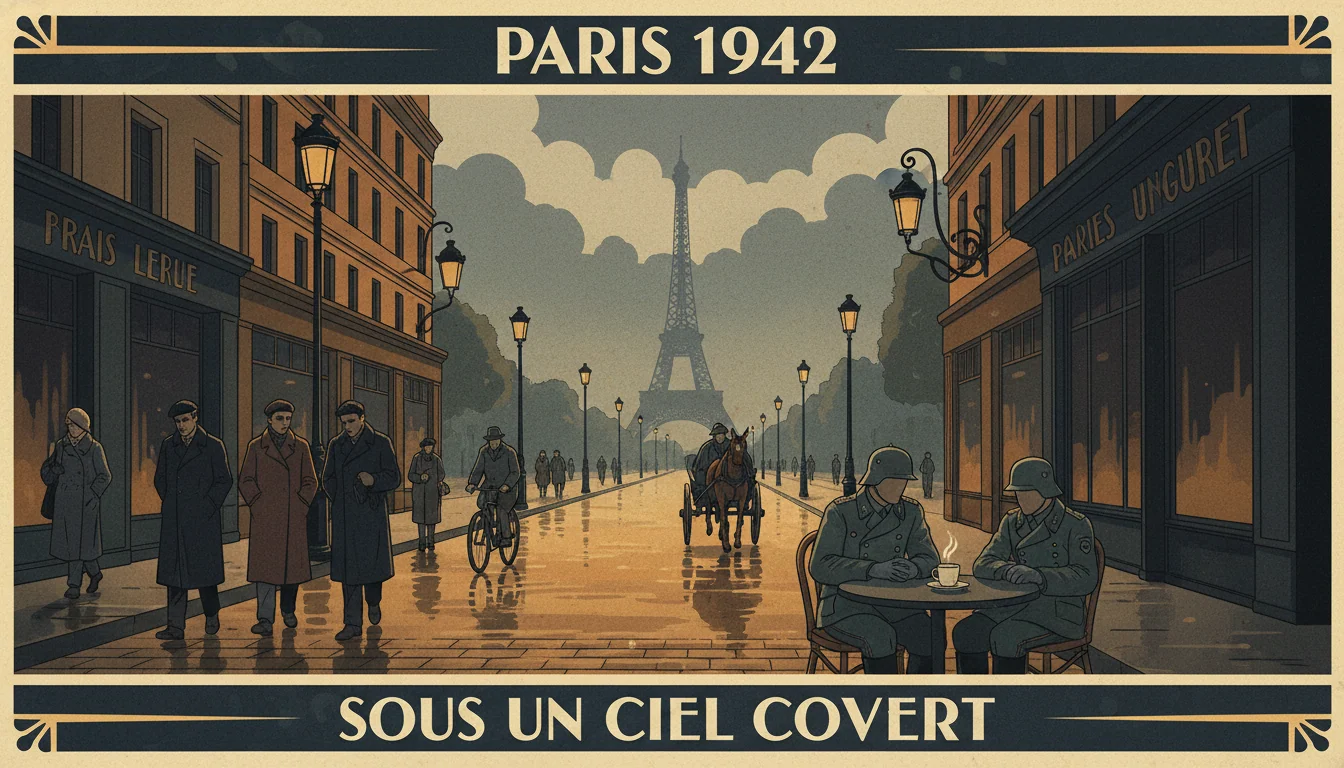
For other time travel guides to cities under occupation or extreme political transformation, see Occupied Paris, 1942 and Stalinist Moscow, 1937.
Travel light. Keep your credentials visible. And buy enough cigarettes at the exchange rate before you go.
Quick Answers
Common questions about this topic
What was Tokyo like in 1946?
Tokyo in 1946 was a city of immense devastation and rapid transformation. American firebombing in 1944 and 1945 had destroyed roughly 65 percent of the city. The population was surviving on far below adequate caloric intake. The American Occupation under General MacArthur was restructuring Japanese law, government, and daily life simultaneously. Black markets were the economic lifeline for most residents.
Who governed Japan in 1946?
Japan in 1946 was governed by the Supreme Commander for the Allied Powers (SCAP), General Douglas MacArthur, operating from the Dai-ichi Life Insurance Building in Tokyo directly across from the Imperial Palace. The Allied Occupation officially ran from 1945 to 1952. MacArthur's headquarters wielded authority over virtually every aspect of Japanese governance during this period.
What were the Ueno black markets in postwar Tokyo?
The Ueno black market was a sprawling improvised bazaar near Ueno Station that became the main economic lifeline for Tokyo residents in 1945 and 1946. It sold American Army surplus food, cigarettes, clothing, sake, medicine, and almost anything else that could be traded. Similar markets operated near Shinjuku and Ikebukuro. They were technically illegal but operated openly because the alternatives were starvation.
Was it safe for Americans in Tokyo in 1946?
American military personnel operated with enormous freedom and authority in occupied Tokyo and faced little physical threat from the Japanese population, which had been instructed by the emperor and the government to cooperate with the Occupation. Civilian foreign visitors were rare and would have required special authorization to enter Japan during this period.

Need Advice from Someone Who Lived There?
Get firsthand accounts from people who actually lived through these moments in history.
Ask Them YourselfJoin the HistorIQly Club
Get smarter about the past.
Weekly stories, deep dives, and exclusive content straight to your inbox.