Victoria and Abdul vs. History: How Accurate Is the Royal Friendship?
Victoria and Abdul accuracy: how the film's story of Queen Victoria and Abdul Karim compares to the real friendship the palace tried to erase.
Read Wikipedia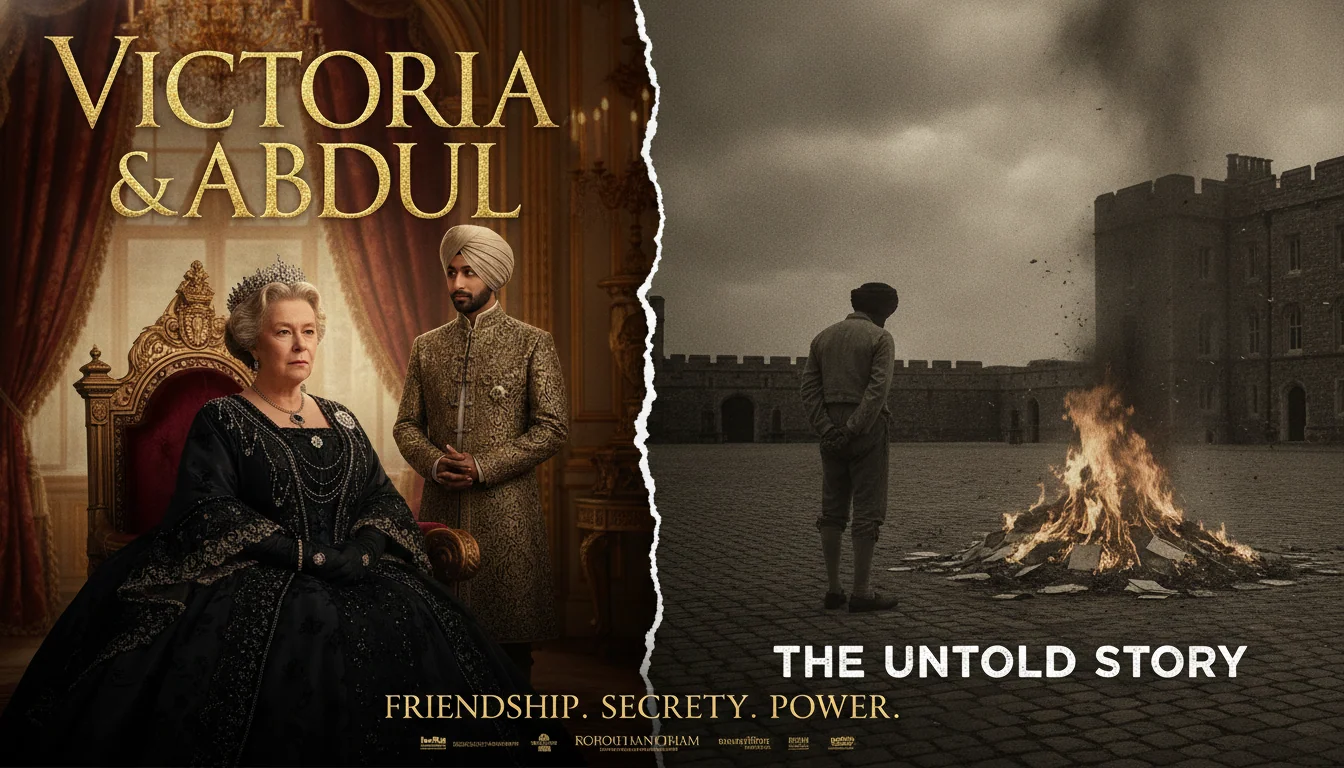
Judi Dench played Queen Victoria twice, first in 1997's Mrs Brown and again two decades later in Victoria and Abdul, and the symmetry is not an accident. Both films are about the same underlying scandal: an aging, grieving monarch forming an intense personal bond with a male servant far beneath her in rank, and a royal household that could not stomach it. Where Mrs Brown dealt with Victoria's Scottish attendant John Brown, Victoria and Abdul tells the story that came after, and that the palace worked much harder to bury: her friendship with Abdul Karim, an Indian clerk who became her teacher, her secretary, and by most accounts the person she trusted most in the final years of her life.
Directed by Stephen Frears and based on Shrabani Basu's book, the film arrived in 2017 as a handsome, gently comic costume drama. It is also, more than most films in this genre, built on a true story that was almost lost. The relationship it depicts was suppressed for a century after Victoria's death, and the film exists largely because Karim's descendants held onto his diary in secret until it resurfaced in 2010. So what is the real Victoria and Abdul accuracy, and how much of what reaches the screen matches the documented history?
What Hollywood Got RIGHT
Abdul Karim's arrival and rapid rise were real
Karim really did travel from India to England in 1887, Victoria's Golden Jubilee year, as one of two Indian attendants sent to wait on her. He was in his mid-twenties, had worked as a clerk in a jail in Agra, and arrived with almost no English. Victoria took to him quickly. Within about a year she had pulled him off menial serving duties and elevated him to "Munshi," meaning teacher or clerk, and made him her Indian secretary. The film's basic arc, an obscure young clerk becoming one of the most important people in the Queen's daily life within a couple of years, is not an exaggeration.
The household's hostility was real, and it was about race
The film's most cutting material, the sneering courtiers, the whispered campaigns, the outright refusal to treat Karim as an equal, is well documented rather than invented for drama. Members of Victoria's household, including her own children, viewed an Indian man occupying a position of intimacy and influence as intolerable. Assistant private secretary Frederick Ponsonby recorded Victoria herself describing the hostility as "race prejudice." In March 1897, members of the household reportedly threatened to resign en masse rather than let Karim travel with the Queen to the French Riviera. Victoria, furious, backed him anyway.
Victoria genuinely studied Urdu with him
The film's scenes of language lessons are grounded in fact. Victoria studied Hindustani, the term then used for Urdu, with Karim for well over a decade, kept notebooks of vocabulary and grammar, and used the language in meetings with Indian visitors. This was not a passing hobby staged for the cameras; it was a sustained, serious project that occupied real time in her schedule for years.
The honors and privileges Victoria gave him were real
Victoria genuinely showered Karim with rank and property that stunned her household: rooms at Windsor, Balmoral, and Osborne, a personal carriage, prime seats at the opera, and portraits commissioned of him. He was made a Companion of the Order of the Indian Empire and later Commander of the Royal Victorian Order. Victoria also pressed the Viceroy of India for a land grant near Agra to secure Karim's future, which he received. All of this appears in the film in some form, and none of it is invented.
Edward VII's purge after Victoria's death happened almost exactly as shown
The film's grim final act, in which the new king moves immediately against Karim, is one of its most accurate stretches. When Victoria died in January 1901, Edward VII had staff seize letters Karim had kept from the Queen and burn them, reportedly within view of Karim's own home. Karim was ordered to return to India without ceremony. Separately, Victoria's daughter Princess Beatrice, acting as her mother's literary executor, spent years transcribing Victoria's journals into a heavily edited version and destroyed most of the originals, removing much of what Victoria had written about Karim in the process.
What Hollywood Got WRONG
Karim's ambition is softened
The film generally frames Karim as a somewhat passive, dignified figure caught in the household's crossfire, with Victoria as the one pushing his advancement. The historical Karim was more of an active operator on his own behalf. He lobbied hard for higher honors, at one point requesting the title of "Nawab" and appointment as a Knight Commander of the Order of the Indian Empire, a much grander rank than he was ultimately given. The Viceroy and Prime Minister Robert Cecil, Lord Salisbury, both resisted, and Victoria settled for a lesser honor instead. The film's Karim is gentler and less self-interested than the man in the historical record.
The family background controversy is left out
One of the sharper real conflicts is missing from the film. When Karim claimed his father had been a surgeon-general, Frederick Ponsonby investigated and reported back that the man was in fact an apothecary, a much lower rank, at a jail. Victoria refused to believe it and, in a striking detail the film does not use, excluded Ponsonby from dinner for a year as punishment for the report. This episode complicates the film's tidy portrait of Karim as an unambiguously wronged figure.
Mohammed Buksh is flattened into comic contrast
The film gives Karim's fellow attendant, Mohammed Buksh, a role as a bitter, sarcastic foil who resents Karim's rise and functions largely as comic relief. The real Buksh, who arrived with Karim in 1887 and remained a table servant for the rest of his life, never advancing as Karim did, likely had genuine reasons for resentment, but the surviving record does not support the specific personality or running commentary the film gives him. His death is shown occurring in England, which is accurate to the timing, since Buksh died at Windsor in 1899, two years before Victoria.
An uncomfortable medical detail disappears
Victoria's physician, Dr. James Reid, recorded in his own diary a claim that Karim had contracted a venereal disease, information that household critics used as ammunition against him. The film leaves this out entirely, which smooths a genuinely messier historical picture into something closer to hagiography.
The film understates the empire around the friendship
Several critics have pointed out that the film treats Victoria's affection for Karim as a stand-in for enlightened attitudes about empire more broadly, when in reality the same monarch who doted on Karim presided over the height of British colonial rule in India. The household's racism toward Karim is shown clearly, but the wider machinery of empire that shaped why an Indian clerk's status was so threatening in the first place stays mostly offscreen.
Historical Accuracy Score: 7/10
Victoria and Abdul gets the shape of a genuinely strange and moving true story right: an isolated, grieving queen, an ambitious young clerk from Agra, a fourteen-year bond that scandalized a royal household, and a systematic effort to erase it after her death. Where the film goes soft is in Karim's own personality, trimming his ambition and the messier details of his conflicts with the household into a more straightforwardly sympathetic figure, and in leaving out the wider imperial context that made the relationship so combustible in the first place.
What the film gets most right: the household's undisguised hostility toward Karim, and Edward VII's swift, deliberate destruction of the record after Victoria's death.
What it gets most wrong: presenting Karim as a passive, uncomplicated victim rather than the more assertive, self-interested figure the historical record shows.
The bottom line is that the core relationship, the honors, the language lessons, and the purge that followed are all real, and reading Basu's book or Karim's own rediscovered diary afterward only adds detail rather than overturning the film's basic story.
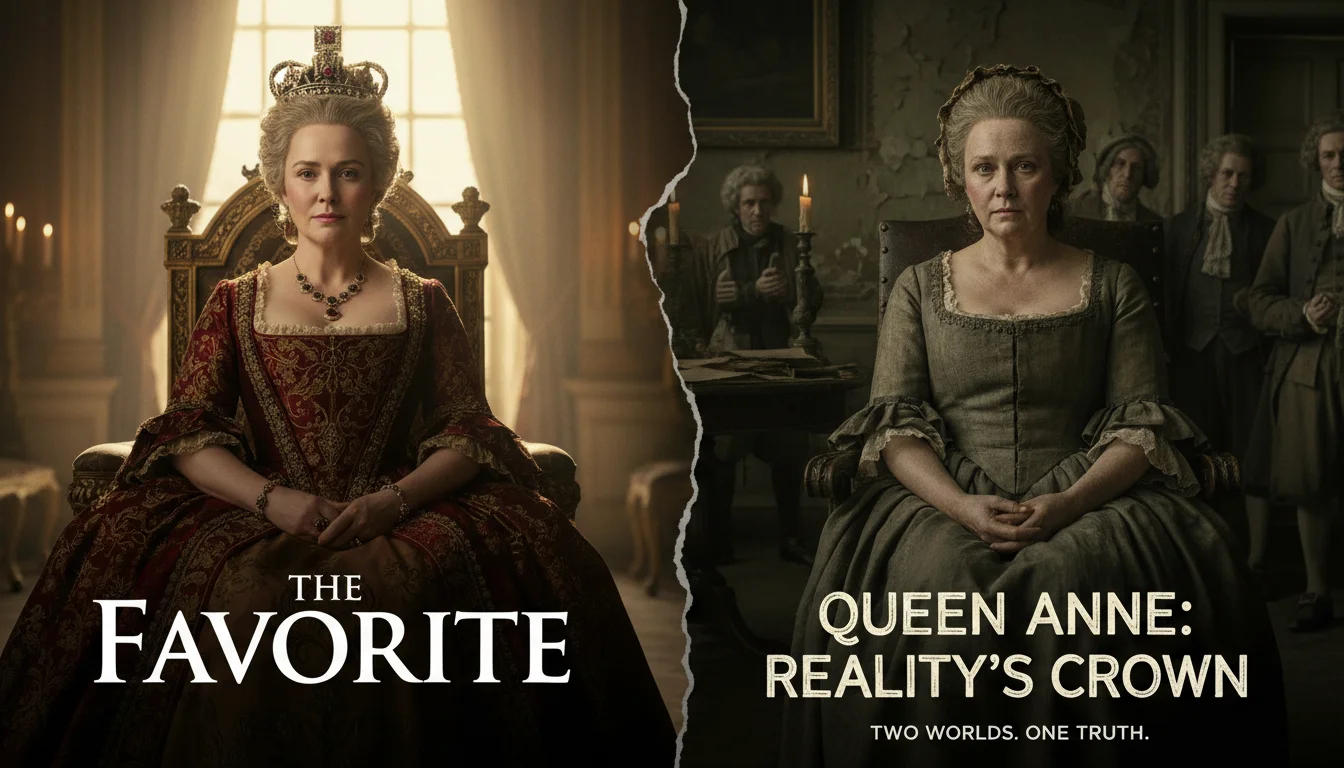
For more on how Hollywood handles royal courts under pressure, see The Favourite vs. History on the poisonous rivalries surrounding Queen Anne, and The King's Speech vs. History on how another British monarch's private struggles were reshaped for the screen.
Quick Answers
Common questions about this topic
Is Victoria and Abdul based on a true story?
Yes. The 2017 film is based on Shrabani Basu's 2010 book about Abdul Karim, an Indian clerk who became Queen Victoria's close companion and teacher during the final 14 years of her reign, from 1887 until her death in 1901. Basu's research drew on Karim's own diary, rediscovered by his family that same year.
Did Queen Victoria really learn Urdu from Abdul Karim?
Yes. Victoria studied Hindustani (Urdu) with Karim for over a decade and kept notebooks of her lessons, some of which survive at Windsor Castle. She used the language in audiences with Indian visitors and considered the lessons a serious intellectual pursuit.
What happened to Abdul Karim after Queen Victoria died?
Within hours of Victoria's death in January 1901, her son and successor Edward VII sent staff to seize the correspondence Karim had kept and had it burned. Karim was ordered back to India, where he lived on the estate Victoria had secured for him near Agra until his death in 1909 at around 46 years old.
Was the relationship between Victoria and Abdul Karim romantic?
There is no documented evidence of a romantic or physical relationship. Historians describe the bond as an intense, unconventional friendship in which Victoria treated Karim as a favorite and, in her own letters, something close to a surrogate son, which was itself enough to scandalize the royal household.

Debate the Accuracy with the Real Figures
Ask the real people what Hollywood got wrong about their lives.
Create your free account →No card required. Some figures and features require a paid plan.
Join the HistorIQly Club
Get smarter about the past.
Weekly stories, deep dives, and exclusive content straight to your inbox.