A Time Traveler's Guide to the Kingdom of Dahomey, 1780
Kingdom of Dahomey history, on the ground: before The Woman King turned the Agojie into cinema, they were the real military force of a real 1780 kingdom.
Read Wikipedia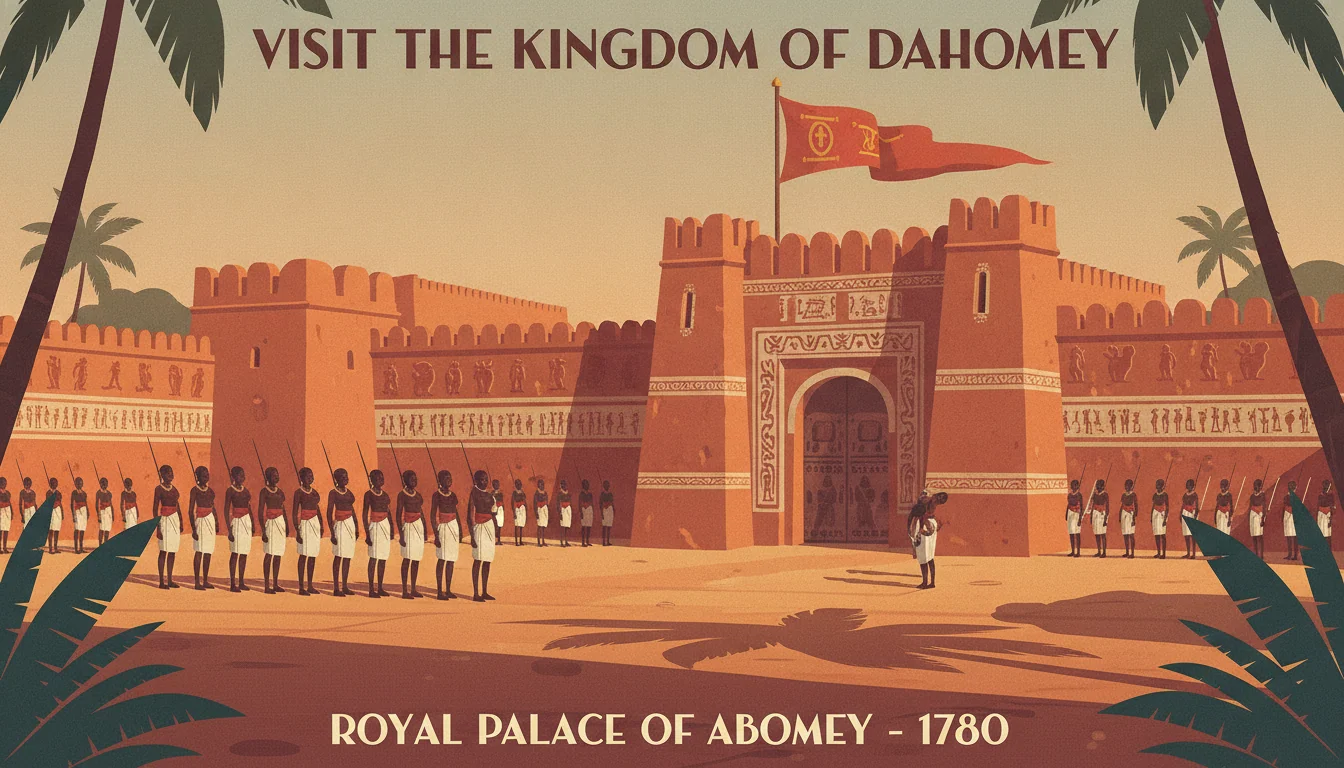
The Kingdom of Dahomey in 1780 is not what most visitors imagine when they think of West Africa. It is not a village. It is not a jungle. It is a centralized, literate-by-proxy, militarily sophisticated state with a walled palace complex the size of a small city, a female military corps that will frighten you even when they are standing at attention, and a trade economy that runs on human beings. Your visit will be remarkable. Your survival is not guaranteed.
Here is what you need to know.
The world you are entering
Dahomey occupies a corridor of land running from the fertile interior plateau down to the Atlantic coast of West Africa - in present-day terms, roughly the southern third of Benin. The kingdom was founded in the early 17th century when Fon-speaking peoples from the interior established a dynasty at Abomey. By 1780, Dahomey has been expanding aggressively for fifty years under a series of formidable kings, absorbing neighboring Fon, Ewe, and Gbe-speaking peoples through conquest, alliance, and intimidation.
The current king is Kpengla, who came to power in 1774 and will rule until 1789. He is expansionist, mercurial, and deeply serious about ceremony. His court at Abomey is the center of everything - economic, military, religious, and political. Everything flows to and from the palace. If you are not connected to the palace in some way, you are an irrelevance at best and a liability at worst.
The kingdom runs on two parallel economies. The first is agricultural and artisanal - palm oil, cotton cloth, iron tools, and food crops produced by Dahomey's farming villages. The second is the slave trade. Dahomey raids neighboring kingdoms, takes captives, and sells them to European traders at the port of Ouidah on the coast, roughly forty miles south of Abomey. European ships - Portuguese, French, English, Dutch - anchor offshore, and their factors live year-round in Ouidah's merchant quarter. The king takes a percentage of every sale. It is a state-run business that makes Dahomey wealthy and powerful and that pays for the Agojie.
The Agojie
Do not stare at them. This is the single most important piece of practical advice you will receive in Dahomey.
The Agojie - called Mino in the Fon language, meaning "our mothers" - are the king's female soldiers. By 1780 they number in the hundreds, though this will grow to several thousand by the 19th century. They are not palace decorations. They are a professional military force with their own command structure, their own barracks within the palace complex, their own weapons and training drills, and their own fierce institutional pride.
Their origins lie in the gbeto, royal huntresses who accompanied earlier Dahomey kings. Kpengla's predecessors expanded the force's role into actual military operations - raiding, skirmishing, and eventually pitched battle against enemies who learned too late to take them seriously. They are armed with muskets, bladed weapons, and wooden clubs. Their drills are daily and vigorous. Their discipline is, by the standards of 18th-century armies anywhere on earth, exceptional.
They guard the king's private quarters. No man may enter the king's inner palace. The Agojie are the wall between the king and the world. A male attendant who wishes to enter the inner compound sends a woman ahead to announce him and waits for permission. Breach the protocol and the consequences are immediate.
Eye contact with the Agojie is tolerable. Commentary on their appearance is not. Touching them is out of the question.
Abomey: the city
You arrive via a series of laterite roads that converge on a walled city of perhaps twenty to thirty thousand people. The walls are earth and clay, thick enough to walk on, punctuated with gates guarded by soldiers. The smell is cooking fires, palm oil, red dust, and animals.
The royal compound - the Dahome, which gives the kingdom its name - is a city within the city. "Dahome" means roughly "inside the stomach of Dan," referring to the snake deity Dan who was said to inhabit the site when the founding king built his palace on top of him. It sprawls across several dozen acres and comprises the king's living quarters, the shrines of the royal ancestors, the Agojie barracks, the treasury, the storehouses for tribute, and the compounds of the great court officials.
The walls of the palace are decorated with bas-reliefs in baked clay - the victories of past kings, the animals associated with each dynasty, the totems and symbols of royal power. They are painted in red and white and yellow, and they cover every flat surface like a monumental illustrated chronicle that anyone who can read the symbols will understand.
You will not be admitted to the inner palace. Arrange accommodation through the compound of a court official or, if you have arrived via Ouidah, through the network of European merchant factors who maintain houses and local contacts. Portuguese factors in particular have operated at Ouidah for over a century and have working relationships with Dahomey's court. Presenting yourself as a merchant representative from a European nation is your safest cover.
The Annual Customs
If your timing is right (or wrong, depending on your constitution), you will arrive during the Huetanu - the Annual Customs, a multi-day ceremony that is simultaneously a religious rite, a political performance, and the largest public gathering the kingdom holds.
The Customs include distributions of gifts to the populace, military reviews by the Agojie and the male army, praise songs celebrating past kings, and libations at the royal tombs. The dead kings of Dahomey are not considered gone. They are considered powerful ancestors whose goodwill must be maintained, and the Customs are partly an annual maintenance contract with the royal dead.
They also include human sacrifice. Prisoners of war and condemned criminals are executed at the tombs of the ancestors. The number varies by year and by the available supply of prisoners. If you are a foreign merchant or representative, you will not be expected to participate, but you will be expected to witness without visible discomfort. Europeans at Ouidah have been attending and reporting on the Customs for over a century at this point, and their accounts describe both the scale of the ceremony and the practical equanimity the court expects from foreign observers.
Stay still. Do not speak during the ritual portions. Do not reach for anything that looks like a writing implement or a drawing tool until you are back in your accommodation. The court has seen Europeans make records of the Customs before and is not always pleased by what the records say when they reach European audiences.
The slave market at Ouidah
If you travel to the coast, you will pass through Ouidah (also written Whydah or Glewe). It is Dahomey's trade window to the Atlantic and one of the largest slave-exporting ports on the West African coast. The tree-lined boulevard from the king's compound in Ouidah to the beach - the Route des Esclaves - ends at a large arch near the waterline. Beyond the arch, there is nothing but ocean and the ships.
The scale of what you are witnessing is historically real. Between roughly 1720 and 1850, Dahomey exported somewhere between 300,000 and 400,000 people across the Atlantic through Ouidah. Many were captives from the kingdom's military campaigns against neighbors - Mahi, Yoruba, Nago peoples. Some were Dahomeans convicted of crimes or accumulated as war debt.
The European merchants who buy them are Portuguese, French, English, and Dutch. They pay in cowrie shells, cloth, iron bars, guns, alcohol, and brass. The king's government regulates the trade, sets the prices, and takes its cut. Dahomey became powerful in part because it rationalized the slave trade as a state enterprise rather than leaving it to individual raiders.
There is no comfortable frame for being a tourist here. Note it, understand it, and use it to calibrate everything else you see in Abomey's palaces.
Food and practical survival
Dahomey's court cuisine is built around maize porridge (akassa), black-eyed peas, palm-oil stews, dried fish, and yams. You will eat better in the households of senior officials than in the market stalls of Abomey, where food is available but variable. Palm wine is the common drink; it is produced fresh daily and consumed quickly, which is relevant information about its fermentation state.
Do not eat or drink anything placed before you in a ritual context until you understand what the occasion is. During the Customs, some items offered to guests are offerings to the ancestors and are meant to be acknowledged rather than consumed.
Malaria is present in the coastal lowlands. Abomey's inland elevation offers some protection, but the Ouidah coast is genuinely dangerous in the rainy season. If you are unacclimatized, the first few weeks in the humid south will be difficult.
What to take away
Any honest account of Kingdom of Dahomey history has to hold two facts together. Dahomey in 1780 is a state that does not fit any comfortable historical template. It is militarized, hierarchical, sophisticated in its administration, and built on a foundation of predation against its neighbors. Its female warriors were real, effective, and celebrated within the kingdom centuries before the cinema discovered them. Its court culture was rich enough to produce bas-reliefs that still survive in the Musee Historique d'Abomey and tapestries that reached the Musee de l'Homme in Paris.
It was also one of the principal suppliers of enslaved human beings to the Atlantic trade for over a century.
Both of these things are true at the same time, and a visit to Abomey in 1780 will not let you separate them.
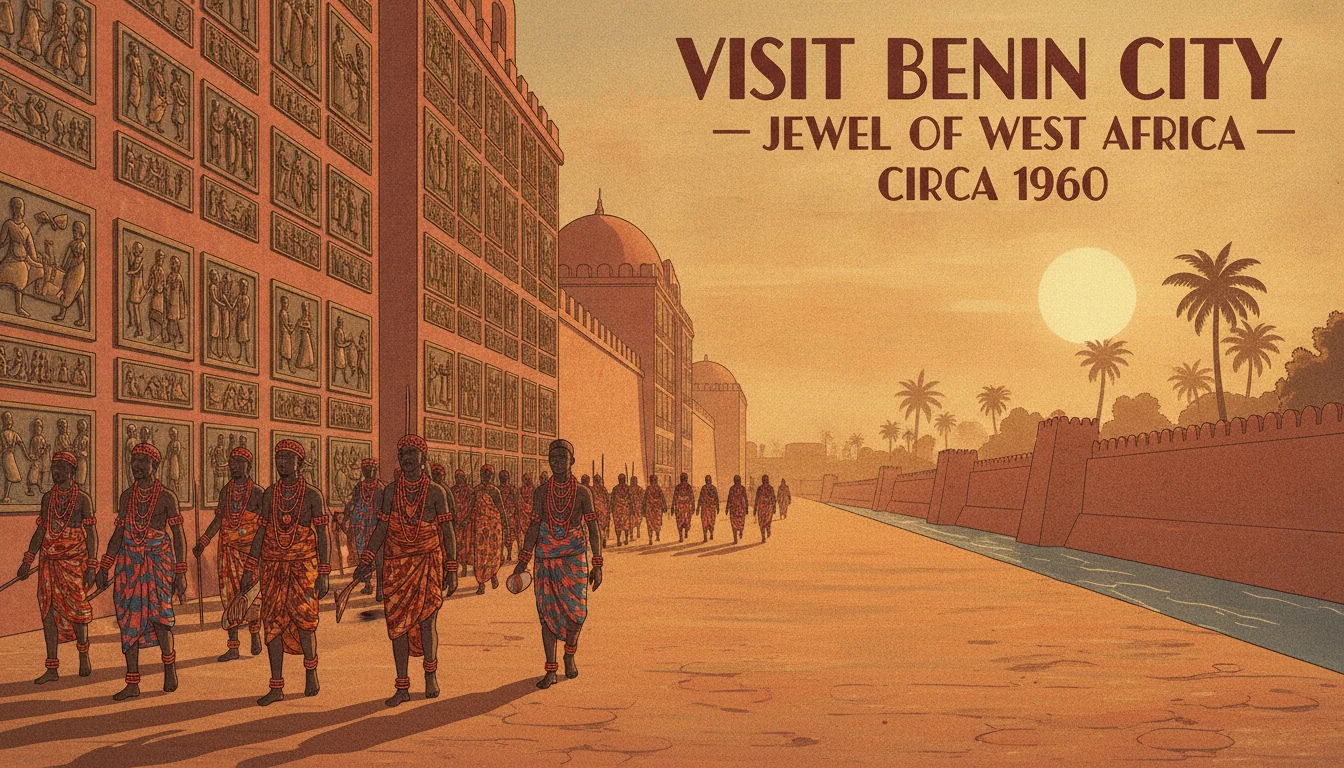
For other visits to complex African states that European history has systematically under-described, see our guide to the Kingdom of Benin, 1600 and the Ashanti Empire at its peak, 1800.
Quick Answers
Common questions about this topic
Where was the Kingdom of Dahomey?
The Kingdom of Dahomey occupied what is now the southern part of the Republic of Benin in West Africa. Its capital was Abomey, an inland walled city. The kingdom controlled a corridor from the interior to the coast, including the port of Ouidah (Whydah) on the Atlantic.
Who were the Agojie?
The Agojie, known in Fon as Mino (meaning 'our mothers'), were a corps of female soldiers serving the king of Dahomey. Beginning as palace guards in the early 18th century, they grew into a professional military force numbering in the thousands by the 19th century. Armed with muskets, clubs, and blades, they fought in Dahomey's wars of expansion and were feared by neighboring kingdoms.
Was Dahomey involved in the slave trade?
Yes. Dahomey was one of the largest African suppliers to the transatlantic slave trade during the 18th century, raiding neighboring kingdoms and selling captives to European traders at Ouidah. The revenue from slave sales funded the royal court, the military, and Dahomey's expansion. This paradox - a militarily powerful African state built partly on the sale of other Africans - was central to Dahomey's economy and is historically well documented.
What religion did people in Dahomey practice?
The dominant religion was Vodun, a complex system of divine spirits who could possess humans and intercede in daily life. The Vodun of Dahomey, brought to the Americas by enslaved Dahomeans, formed the basis of Haitian Vodou, Brazilian Candomble, and other Afro-Atlantic traditions. Ancestor veneration was central, and the Annual Customs ceremony was both a religious rite and a political performance of royal power.

Need Advice from Someone Who Lived There?
Get firsthand accounts from people who actually lived through these moments in history.
Create your free account →No card required. Some figures and features require a paid plan.
Join the HistorIQly Club
Get smarter about the past.
Weekly stories, deep dives, and exclusive content straight to your inbox.