Arsenal: The Luger P08 Pistol
The Luger P08 pistol: Germany's iconic toggle-lock sidearm of both World Wars, revered for its precision but eventually replaced by the more reliable Walther P38.
Read Wikipedia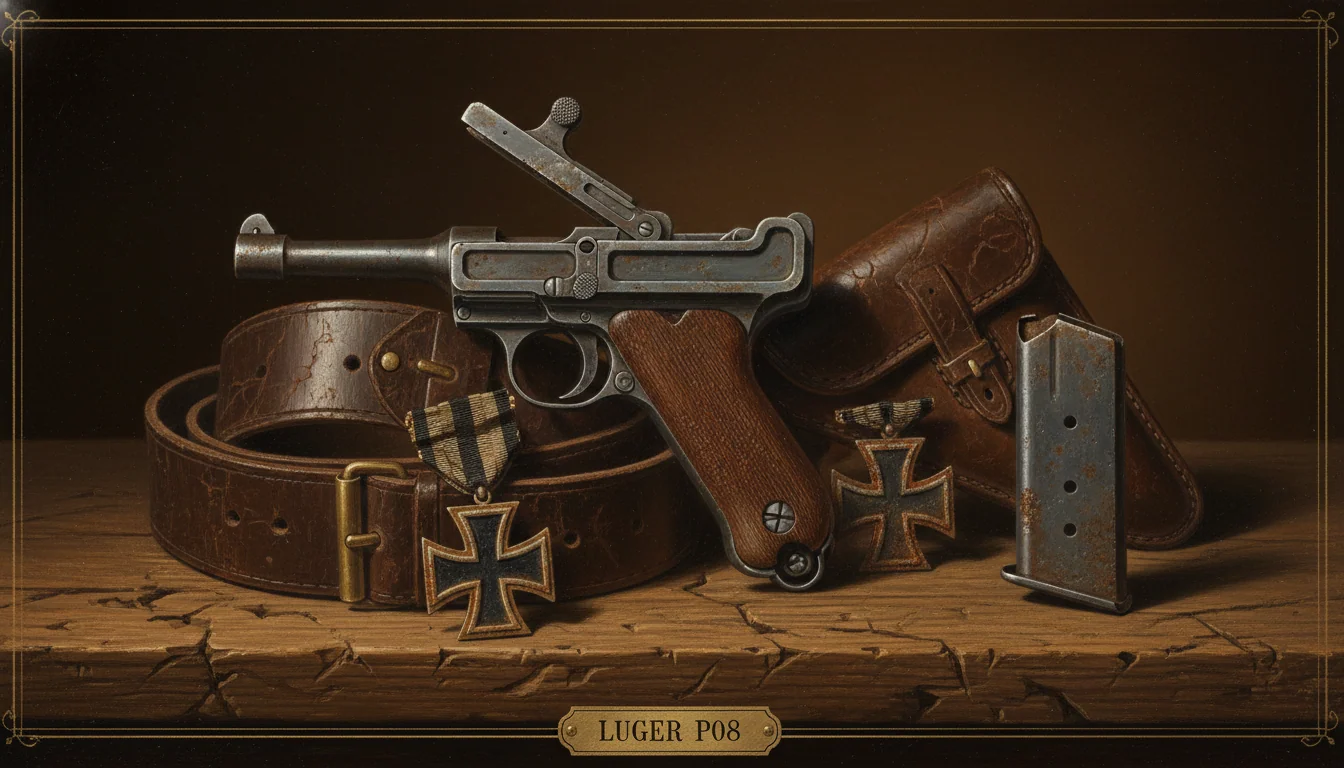
The Luger P08 has one of the most immediately identifiable silhouettes in the history of firearms. The steep-angled grip, the slender barrel, and above all the toggle-lock mechanism rising and snapping shut on the top of the receiver have made it the visual shorthand for a German officer's sidearm across a century of films, novels, and war photography. What those images rarely convey is the extraordinary complexity of the mechanism that produced the silhouette - and the ways that complexity created problems on every front where the gun was carried.
The mechanism it came from
Georg Luger did not invent his pistol from nothing. He worked from the Borchardt C-93, designed by the American-born gun inventor Hugo Borchardt and introduced in 1893. The Borchardt was a genuine technical achievement - it was among the first commercially successful semi-automatic pistols and introduced the detachable box magazine in the grip that became the standard configuration for auto-loading pistols.
The Borchardt was also ugly, ungainly, and difficult to shoot with one hand. Its toggle mechanism sat behind the grip in an awkward housing that made the overall weapon impractical as a military sidearm. Borchardt himself was not inclined to alter his design. Luger, working as a salesman and technical consultant for Deutsche Waffen und Munitionsfabriken (DWM) in Berlin, reworked the entire weapon.
The result, introduced around 1898-1900, moved the toggle mechanism to the top of the receiver, drastically inclined the grip to a 55-degree angle that aligned naturally with the arm for pointing, shortened and thinned the barrel, and redesigned the lockwork. The toggle - two hinged arms forming a kind of knee-joint that locked straight when the breech was closed - gave the pistol both its distinctive look and its unusual reliability sensitivity. When the toggle was correctly aligned and the ammunition was properly loaded, it functioned smoothly. When conditions were less than ideal, the mechanism had a tendency to remind the shooter that tolerances matter.
Switzerland first, Germany later
The Swiss Army adopted the Luger in 1900 in a 7.65mm caliber known as .30 Luger. Switzerland, characteristically, wanted a high-quality precision sidearm and was willing to pay for one. The Swiss model, manufactured to exacting standards at the Federal Munitions Factory in Bern, established the Luger's reputation as an accurate and well-made weapon.
Georg Luger made a second important contribution alongside the pistol itself: he designed a new cartridge for the German military trials. The 9x19mm Parabellum - named for the Latin phrase si vis pacem para bellum, "if you want peace, prepare for war," which was DWM's motto - was designed to provide more stopping power than the 7.65mm round while fitting the same basic mechanism. It became the most widely used pistol and submachine-gun cartridge in the world, still standard NATO ammunition and in production today. The Luger's own legacy is debatable; the cartridge it inspired is not.
The German Navy adopted the 9mm Luger in 1904. The German Army followed in 1908, designating the weapon Pistole 08 - the year of adoption appended as the model designation.
The P08 in service
The standard P08 had an 102mm (roughly four-inch) barrel and fed from an eight-round single-stack box magazine inserted into the grip. Sights were fixed. The trigger mechanism was single-action: the toggle had to be manually retracted to chamber the first round, after which each pull of the trigger fired and cycled the action automatically.
For a sidearm carried by officers and specialists rather than used in protracted sustained fire, these specifications were adequate. German officers in World War I carried the P08 as a mark of rank and as a practical weapon for the close-quarters fighting of trench raids, where the pistol's accuracy at short range and its relatively large magazine compared to revolvers made it useful.
One variant deserves separate treatment: the Lange Pistole 08, known as the Artillery Luger. This model, introduced around 1914-1917, mounted a 200mm barrel and was designed with a notched tangent rear sight calibrated to considerable ranges. A detachable wooden shoulder stock converted it into a crude carbine. Most distinctively, it accepted a 32-round drum magazine known as the Trommelmagazin, which fed from the bottom of the grip. The Artillery Luger was issued to machine-gun crews, artillery teams, and stormtroopers who needed more sustained firepower than a standard sidearm provided but could not carry a full-length rifle in their assault role. It was unwieldy by any standard but provided a genuine volume of fire.
What the toggle demanded
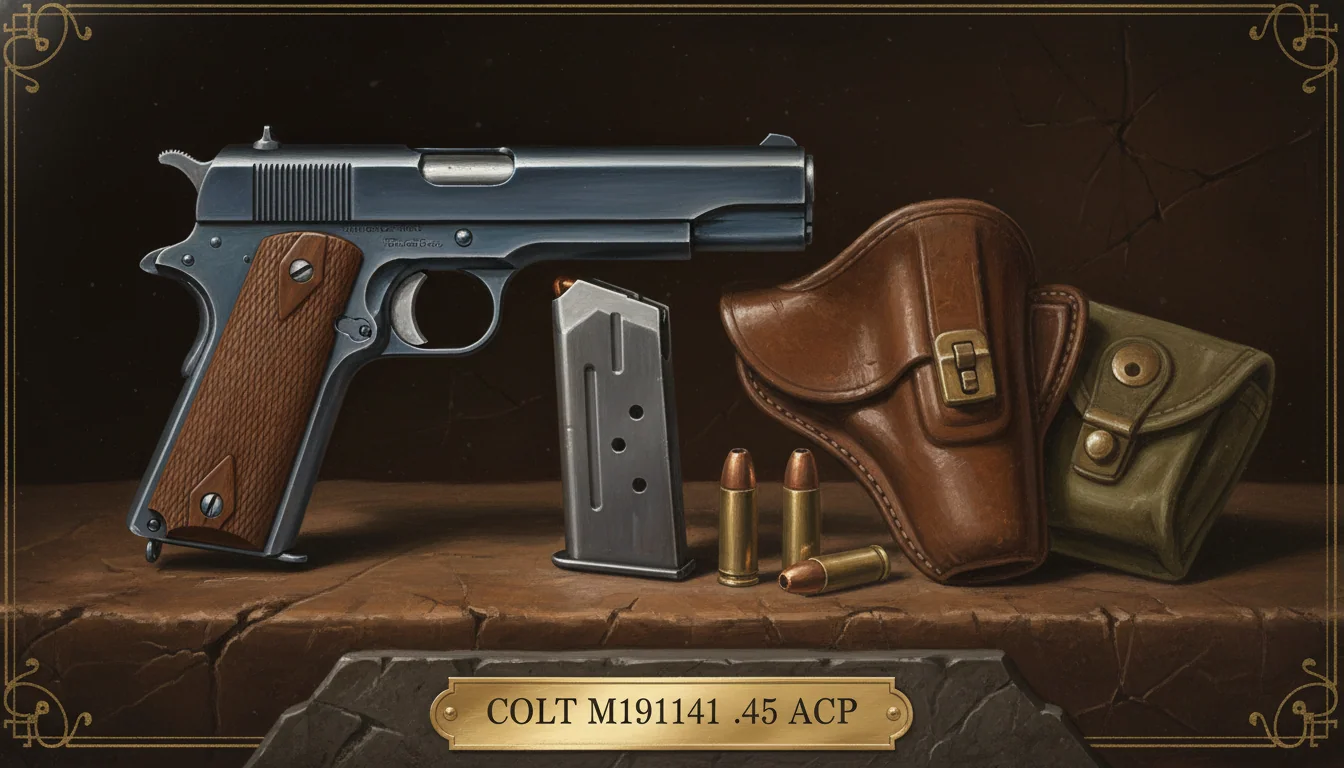
The Luger's aesthetics come directly from its mechanism, and its mechanism's weaknesses come from the same source. The toggle-lock system required tight manufacturing tolerances to function reliably. Every component had to be within precise specifications; the system had little of the self-compensating looseness that makes simpler pistol designs - like the Browning tilting-barrel mechanism used in the 1911 and most modern pistols - tolerant of dirt, debris, and manufacturing variation.
German military specifications for Luger ammunition were strict because the gun demanded strict specifications. Commercial ammunition from other manufacturers, if loaded to slightly different pressure or velocity, could cause the toggle to cycle incompletely or fail to lock properly. In the trenches, where weapons accumulated mud and rain, the Luger required more careful maintenance than most service pistols.
Cold was a related problem. The tight tolerances that the mechanism required meant that lubricants could thicken in winter and slow the toggle's movement enough to cause malfunctions. German soldiers on the Eastern Front in both world wars reported more reliability issues with the Luger than their opponents reported with comparably designed weapons.
World War II and the Walther replacement
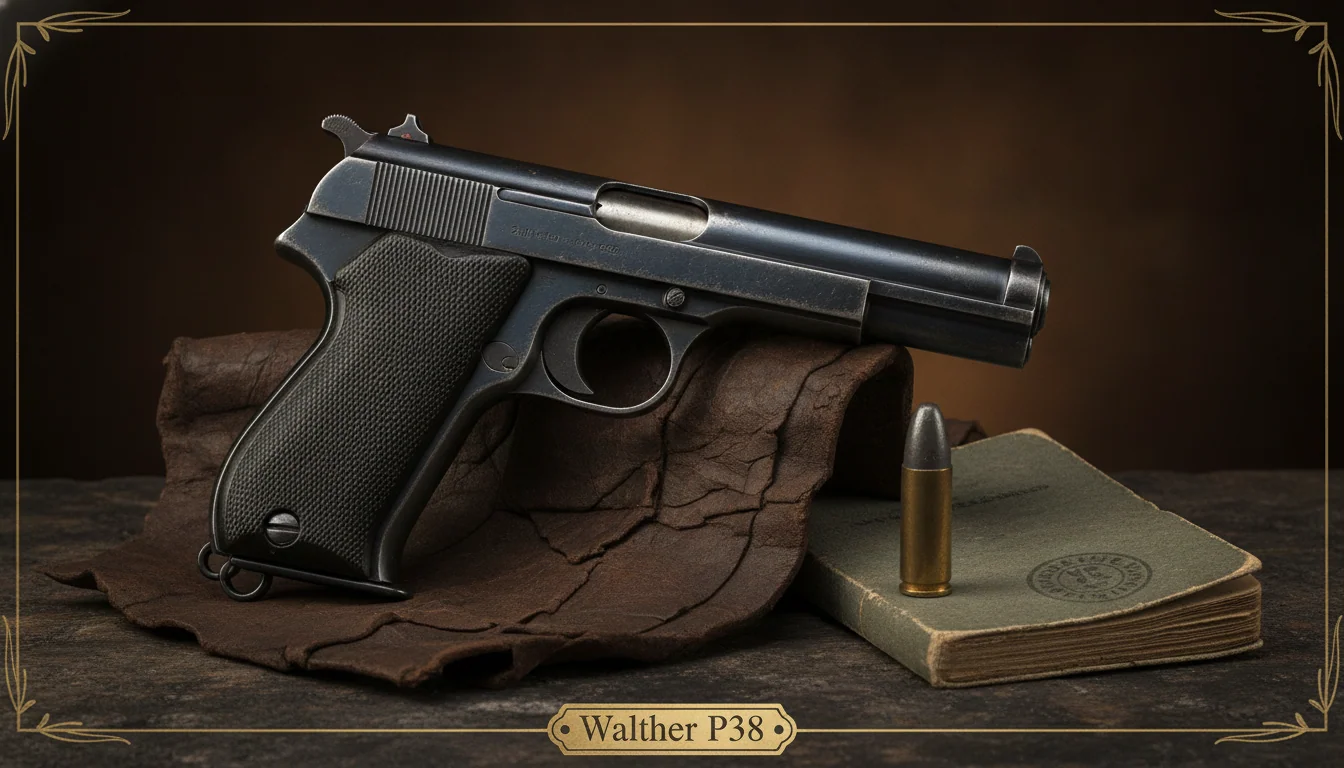
By 1939, the German armed forces were expanding faster than the Luger's complicated manufacturing process could supply them. The P08 required a large number of machined components and skilled assembly time that simpler designs did not. The Walther P38, adopted as a standard German service pistol beginning around 1940, used a different operating system: a tilting-barrel short-recoil action, a double-action trigger for the first shot (requiring no manual cocking), and far fewer precisely machined parts.
The P38 was less elegant and less accurate at longer ranges than the P08. It was more reliable under field conditions, faster to produce, and easier to maintain in the field. The Wehrmacht continued to issue both pistols throughout the war - Lugers already in inventory continued in service, and new Lugers were manufactured by Mauser under contract until production was halted in the early 1940s. But the direction of procurement was clear: the P38 was the future and the P08 was being wound down.
The irony is that the Luger's reliability reputation in military service was considerably worse than its reputation in popular culture. Films and novels associate it with German precision engineering because the pistol looks precise - its mechanism is visible, its lines are clean, its profile is unmistakable. The actual manufacturing precision it required was, in the conditions of wartime field service, a liability rather than an asset.
The trophy problem and the collector legacy
Allied soldiers in both World Wars prized the Luger as a souvenir out of all proportion to its tactical value. The M1 Garand, the standard American rifle of WWII, represented the opposite design philosophy: simple, reliable, and engineered for mass production rather than mechanical elegance. American, British, and Commonwealth soldiers went to considerable lengths to acquire them, sometimes trading substantial amounts of other goods for a German officer's pistol. The Luger's visual distinctiveness made it uniquely identifiable as a prize, in a way that a standard German service rifle was not.
This demand had a secondary effect that persists today: the Luger is one of the most-collected military pistols in history, with a dedicated community of collectors who track the specific manufacturers, proof marks, production years, and wartime variations. A pristine matching-numbers P08 from a prized maker commands prices far above its contemporaries. The pistol that Germany's army considered too expensive and too finicky became the most sought-after item in the German military small-arms catalogue.
Georg Luger's position
Georg Luger died in 1923, a decade before the Third Reich that made his pistol world-famous. He spent his later years in increasingly bitter disputes with DWM and with Borchardt's descendants over credit for the design. The 9mm cartridge, which is probably his most lasting contribution to firearms development, was never commercially controlled by him in a way that produced significant royalties. He died relatively obscure in a Germany that was about to plunge into another round of catastrophes his pistol would be photographed throughout.
The Luger P08 is a remarkable piece of engineering applied to a context that punished remarkable engineering. It was too complex for mass-production armies fighting in mud and cold. It was too demanding about its ammunition for the chaotic supply chains of wartime logistics. It was beautiful, accurate, and extremely cool to look at - which is why, having been replaced in service eighty years ago, it remains the most photographed German military pistol in history. For its most famous contemporary - the pistol that competed with it for officer favour and outlasted it in legend - see our piece on the Mauser C96 Broomhandle.
Quick Answers
Common questions about this topic
Who designed the Luger P08?
Georg Luger (1849-1923) designed it by substantially modifying an earlier pistol by Hugo Borchardt. Luger worked for Deutsche Waffen und Munitionsfabriken (DWM) in Berlin, and his redesign of the Borchardt C-93 produced a far more practical weapon. He also designed the 9x19mm Parabellum cartridge specifically for it.
When was the Luger adopted by the German Army?
The German Army adopted the Luger as its standard sidearm in 1908, designating it the Pistole 08. Switzerland had already adopted an earlier version in 1900. The German Navy adopted the 9mm version in 1904, four years before the Army.
Why was the Luger P08 replaced in German service?
The Luger was expensive and time-consuming to manufacture, sensitive to dirt and cold, and required tight ammunition tolerances to function reliably. By 1940, the simpler and more robust Walther P38 began replacing it as the primary German service pistol. The Luger remained in use throughout World War II, but new production increasingly favored the P38.
What made the Luger's toggle-lock mechanism distinctive?
Unlike most pistols that use a tilting or rotating barrel to lock the breech, the Luger used a knee-joint or toggle-link action: two hinged arms that locked straight when the gun fired and broke upward as the bolt cycled rearward. This produced the pistol's characteristic action - the two arms visibly rising and snapping back down on each shot - and its famously slim profile.

Talk to the People Who Wielded These Weapons
Chat with the soldiers, smiths, and commanders whose lives were shaped by the weapons of their age.
Create your free account →No card required. Talk to anyone in history with 8 free credits a day. Some features require a paid plan.
Join the HistorIQly Club
Get smarter about the past.
Weekly stories, deep dives, and exclusive content straight to your inbox.