Arsenal: The Pike and the Tercio - The Eighteen-Foot Weapon That Ended the Age of the Knight
A pike weapon history in brief: eighteen feet of ash tipped with steel, cheap enough to arm peasants, and lethal enough to end the age of armored cavalry.
Read Wikipedia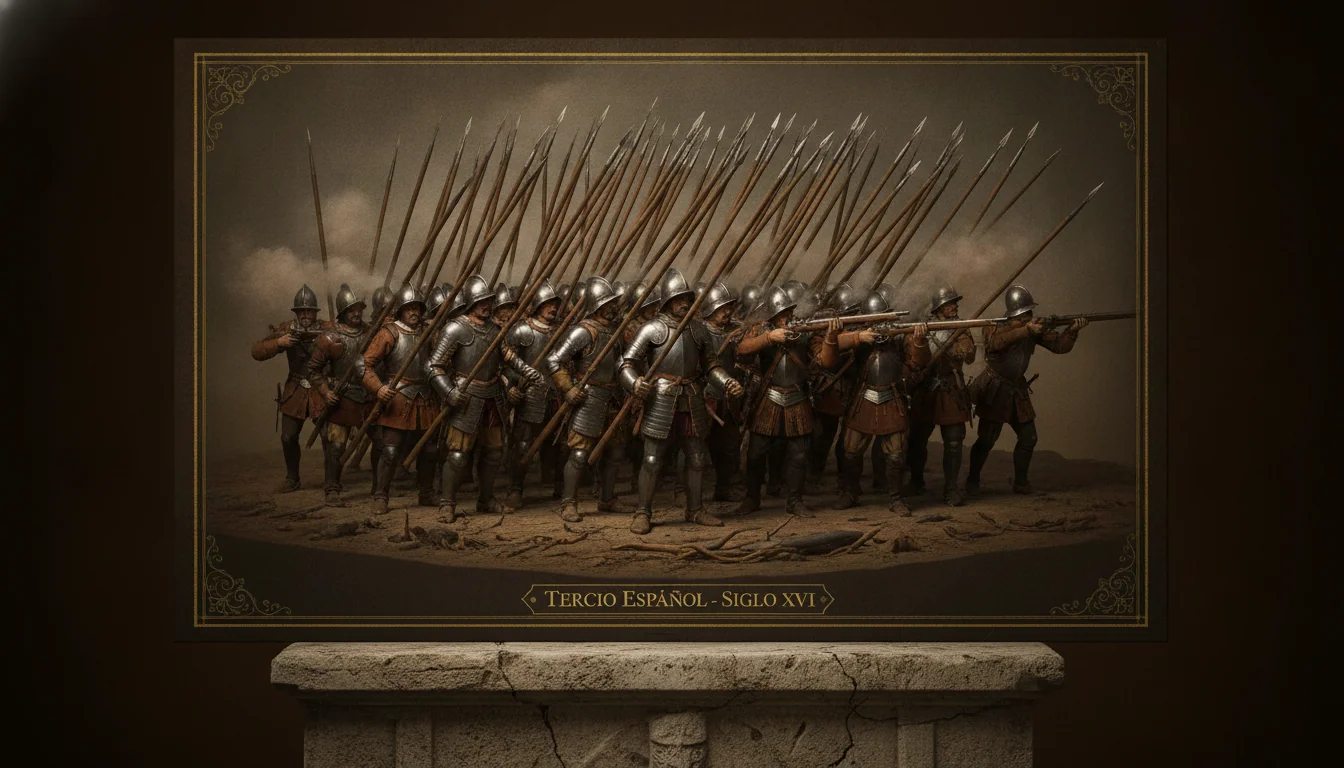
In the winter of 1315, a force of Swiss infantrymen from the forest cantons ambushed an Austrian army in a mountain pass at Morgarten. The Austrians were armored knights on horseback - the kind of force that had been winning European battles for four centuries. The Swiss had pikes and halberds and the geographic sense to fight where horses couldn't maneuver. The knights were destroyed.
This pike weapon history doesn't start at Morgarten - the weapon had appeared in various forms across ancient history - but the 1315 battle announced a new era in European warfare. Over the next three centuries, the pike would dismantle the military supremacy of the mounted aristocracy, create the first European professional infantry culture, and eventually give rise to the Tercio, the combined-arms formation that made Spain the dominant military power of the 16th century.
The weapon itself
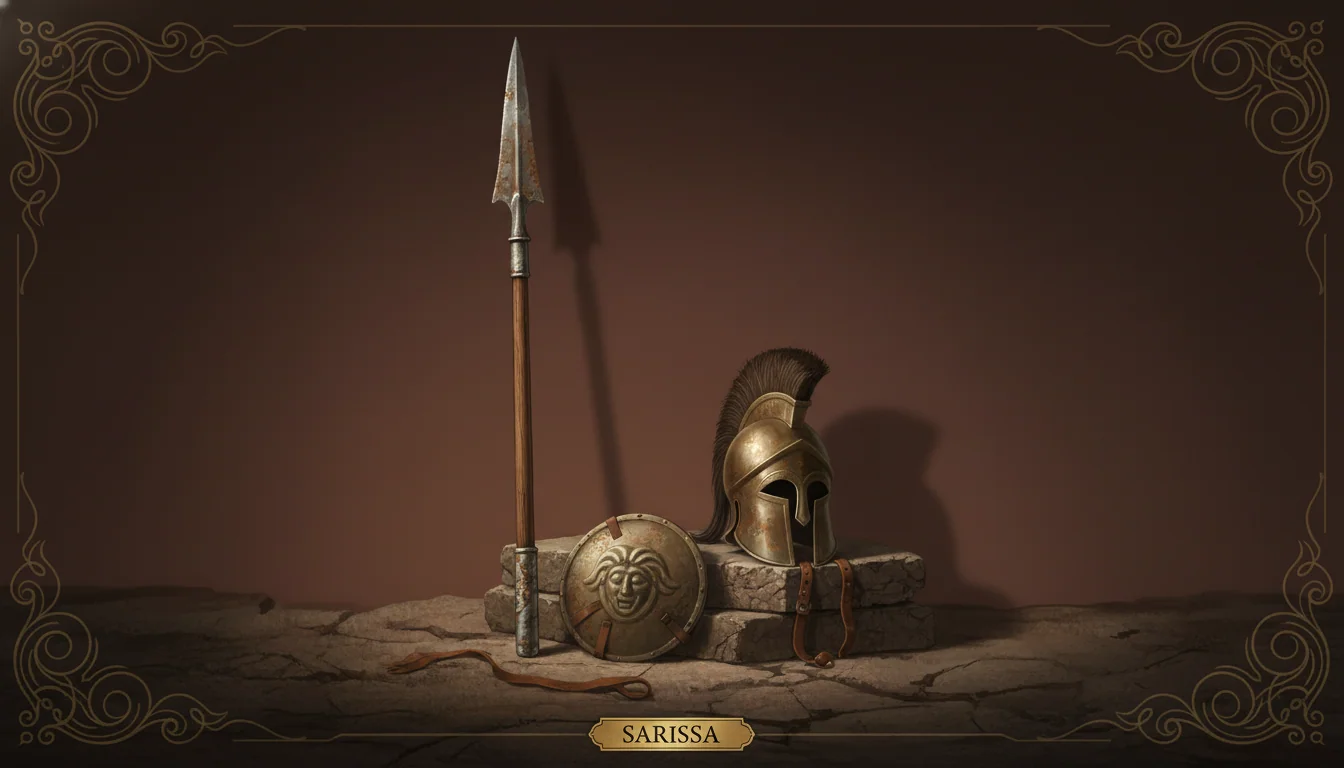
A military pike of the 15th or 16th century was, at its simplest, a length of hardwood - ash was preferred for its combination of strength and flexibility - tipped with a narrow steel head. Campaign pikes ran 15 to 18 feet in length. Some Swiss and Landsknecht examples were longer. The spearhead was small compared to the shaft, just a few inches of double-edged steel, because the pike's killing mechanism was not the point alone but the combined weight and reach of the formation.
Carrying one was not straightforward. A 16-foot pike of hardwood weighs roughly 10 to 15 pounds - manageable for a trained soldier on flat ground, exhausting on a long march through mud, effectively impossible to use well in broken terrain or confined spaces. The Swiss solved the terrain problem by picking their battles carefully. The Burgundian and imperial armies who fought them solved nothing, because they kept attacking on the Swiss terms.
The pike was never a solo weapon. It functioned in formation or not at all. A single pikeman is a person holding a very long stick. A hundred pikemen in a disciplined block, each weapon angled forward at a consistent 45 degrees, is a hedge of steel that no horse will willingly enter and that swords cannot reach without getting impaled first.
The Swiss model
The Swiss cantons that developed pike warfare in the 14th and 15th centuries were not a military culture by design. They were peasant and artisan communities resisting the territorial ambitions of the Habsburgs and the Burgundian dukes. What they lacked in aristocratic cavalry, they compensated for with disciplined training, communal motivation, and a tactical insight: if you pack enough spear points together at the right angles, heavy cavalry becomes irrelevant.
After Morgarten came Laupen in 1339, Sempach in 1386, and then the most consequential series of victories - the Burgundian Wars of 1474 to 1477. Duke Charles the Bold of Burgundy had one of the richest military establishments in Europe. His army combined heavy cavalry, artillery, and hired professional infantry. He attacked the Swiss three times. He lost at Grandson, at Murten, and finally at Nancy in 1477, where he was killed and his body found in the mud three days later, half-eaten by wolves, stripped of his armor.
The Burgundian Wars made the Swiss reputation permanent. Every major power in Europe wanted Swiss pikemen in their armies. For the next century, Swiss mercenary companies commanded premium rates and won battles across the continent. The Vatican Guard, still bearing halberds today, is a vestigial survival of that era.
The Landsknechts and the great exception
The Swiss imposed monopoly-style controls on their mercenary export. They had rules about who could be hired, refused to serve against each other in some conflicts, and maintained a fierce professional pride that occasionally produced atrocities - they were known to kill prisoners rather than ransom them, which simplified logistics. Their grip on the pike mercenary market broke when the Holy Roman Emperor Maximilian I funded the creation of the Landsknechts in the 1480s.
The Landsknechts were German pikemen, trained explicitly on the Swiss model, recruited from the same social strata of artisans and free peasants, and dressed - famously, outrageously - in slashed doublets and particolored hose that made them look like walking geometry experiments. The theory behind the costume was legal: sumptuary laws that restricted fine clothing to the nobility were suspended for Landsknechts on the grounds that men who risked their lives for a living deserved to wear what they pleased.
The two groups despised each other with professional venom. When Swiss and Landsknechts met on the same battlefield on opposite sides, which happened several times during the Italian Wars, they routinely refused to take prisoners. The result was called a bad war, Schlechter Krieg, by German sources, and the phrase needed no further explanation.
The Tercio and the maturation of pike warfare
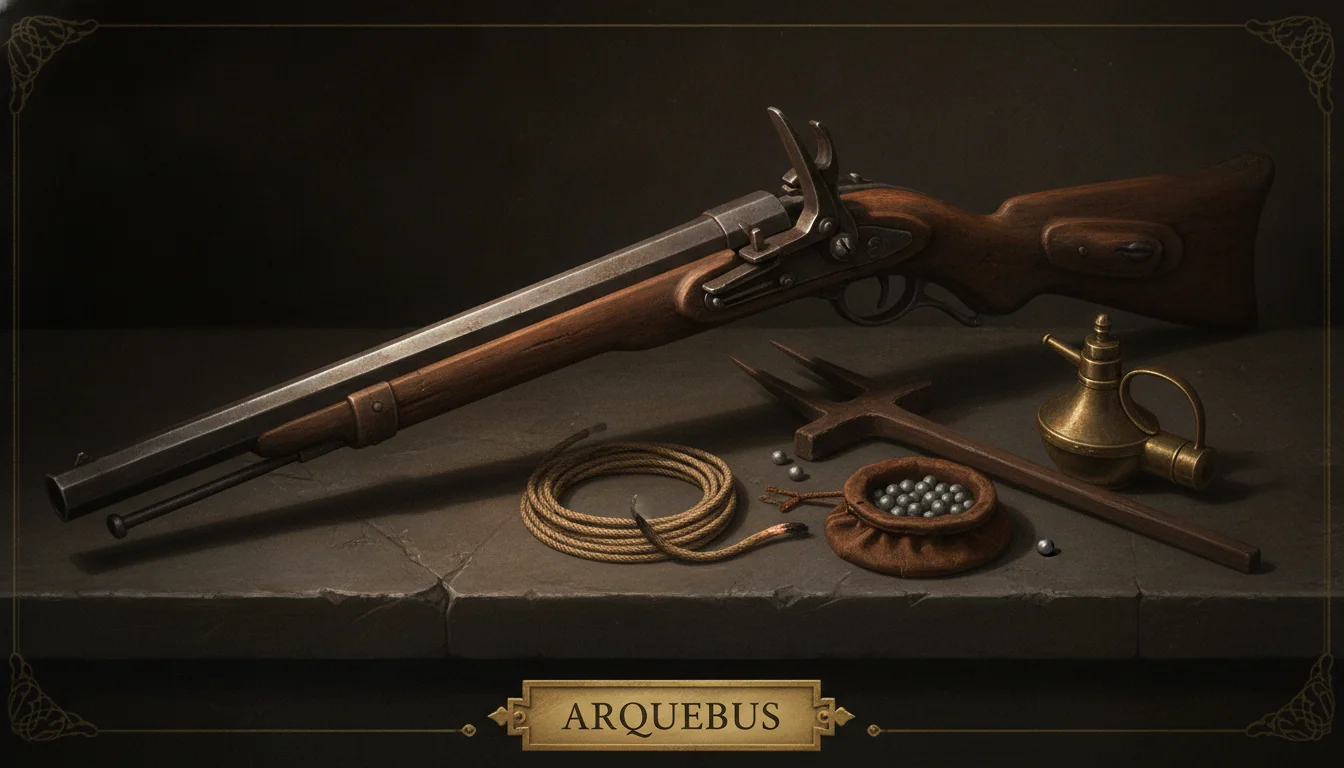
The Spanish Tercio represented the full flowering of what the pike made possible. Developed in the late 15th and early 16th centuries by commanders including Gonzalo de Cordoba (the Great Captain), the Tercio integrated pikemen and firearms infantry into a mutually supporting formation. Arquebusiers sheltered in the gaps between pike squares and fired while the pikes kept cavalry at bay. When the gunmen needed to reload, they retreated behind the wall of steel. When the enemy cavalry retreated, the pikes advanced.
The tactical proof came at the Battle of Pavia in 1525, where Imperial forces defeated the French army of Francis I in what may be the most consequential engagement of the Italian Wars. The French heavy cavalry - the finest in Europe - charged into a combination of Spanish pikemen and arquebusiers and was dismantled. Francis himself was captured. The Tercio framework wasn't the only cause of the victory, but it demonstrated that pike-and-shot tactics could defeat both the armored cavalry and the Swiss pike blocks that had defined warfare for the previous century.
Spanish Tercios dominated European battlefields for most of the 16th century and into the early 17th. They fought in the Italian Wars, the Revolt of the Netherlands, the Armada campaign, and a dozen other theaters. They were not invincible - the Dutch developed effective counter-tactics during their long war of independence - but they remained the benchmark against which other infantry formations were measured.
The end of the pike era
Gustavus Adolphus of Sweden introduced the linear tactics at the Battle of Breitenfeld in 1631 that began the Tercio's decline. Swedish infantry reduced the proportion of pikemen and increased musketeer firepower, relying on speed and shock rather than the deep defensive squares the Tercio favored. At Breitenfeld, a Catholic League army with substantial Tercio contingents was decisively defeated. The pike did not disappear overnight - it remained a significant part of European armies through the mid-17th century - but its tactical primacy was ending.
The final blow was the socket bayonet. Earlier bayonets had been plug designs inserted into the musket barrel, which meant you couldn't fire while the bayonet was fixed. The socket bayonet, developed in the 1680s and 1690s, clamped around the barrel and left the muzzle clear. Suddenly every musketeer was also a pikeman. The need for a separate pike arm vanished almost immediately. By around 1700, pike formations had disappeared from most European armies, replaced by the universal musketeer who could both shoot and present steel.
Three centuries of pike dominance ended with a metal collar and a socket.
The weapon's legacy
The pike's contribution to military history is larger than its weapon-class suggests. It ended the era of armored cavalry as the decisive battlefield arm - a transformation that had profound social consequences, since the mounted knight and the political authority of the nobility were tightly entangled. It created the first sustained market for professional infantry, and that market produced the Landsknecht and Swiss mercenary cultures that shaped Renaissance European warfare.
The Tercio it inspired was the template from which early modern combined-arms tactics developed. Every subsequent combined-arms formation - infantry squares with integrated artillery, later cavalry-infantry coordination - descends in some line from the tactical logic that Spanish commanders worked out in the Italian Wars with pikes and arquebuses.
Not bad for a stick.
Quick Answers
Common questions about this topic
How long was a military pike?
Campaign-ready pikes were typically 15 to 18 feet long (roughly 4.5 to 5.5 meters). Some Swiss and Landsknecht pikes in the 15th and 16th centuries ran even longer, up to 21 feet, though longer shafts were harder to maneuver. The standard military pike of the 16th-century Tercio era settled around 15 to 18 feet.
What made pikes effective against cavalry?
A formation of pikemen presenting a hedge of pike points was physically impossible for a horse to charge into. No horse would willingly run onto a wall of steel. The pike's length also meant that mounted knights, whose weapons were shorter swords and lances, could not reach the pikemen before the pikes reached them. It made heavy cavalry essentially obsolete against disciplined infantry.
What was the Tercio?
The Tercio was a Spanish infantry formation of the 16th and early 17th centuries that combined large blocks of pikemen with smaller units of arquebusiers and musketeers. The pike squares protected the gunmen while they reloaded; the gunmen provided firepower that pure pike formations lacked. The Tercio dominated European warfare for roughly a century.
What replaced the pike?
The socket bayonet, developed in the late 17th century, effectively merged the pike and the musket into a single soldier. Once every musketeer could fix a blade to the end of his gun and present a hedgehog of steel, a separate pike formation was no longer needed. By around 1700, pikes had disappeared from most European armies.

Talk to the People Who Wielded These Weapons
Chat with the soldiers, smiths, and commanders whose lives were shaped by the weapons of their age.
Create your free account →No card required. Some figures and features require a paid plan.
Join the HistorIQly Club
Get smarter about the past.
Weekly stories, deep dives, and exclusive content straight to your inbox.