Declassified: MKUltra, the CIA's Secret Mind Control Program
The CIA's MKUltra program dosed unwitting citizens with LSD for two decades. The files that survived a 1973 shredding order tell the story.
Read Wikipedia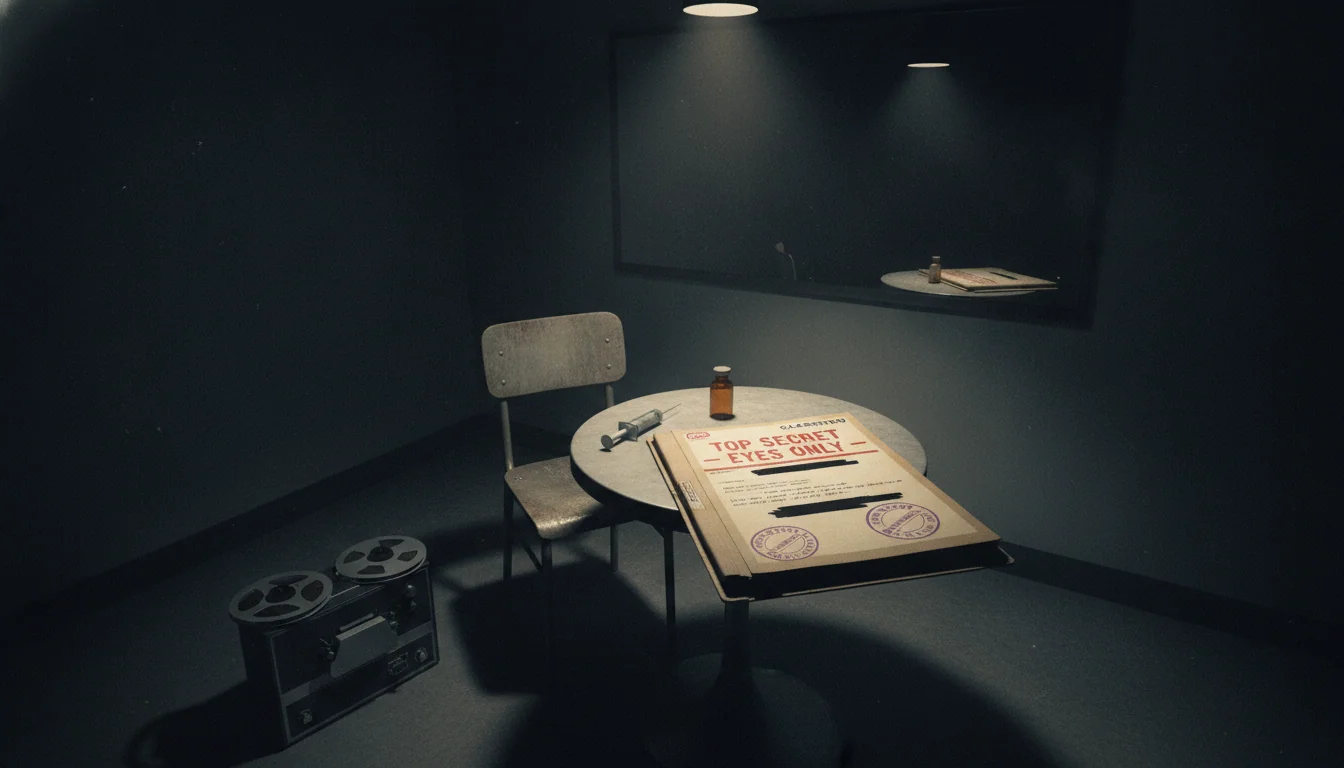
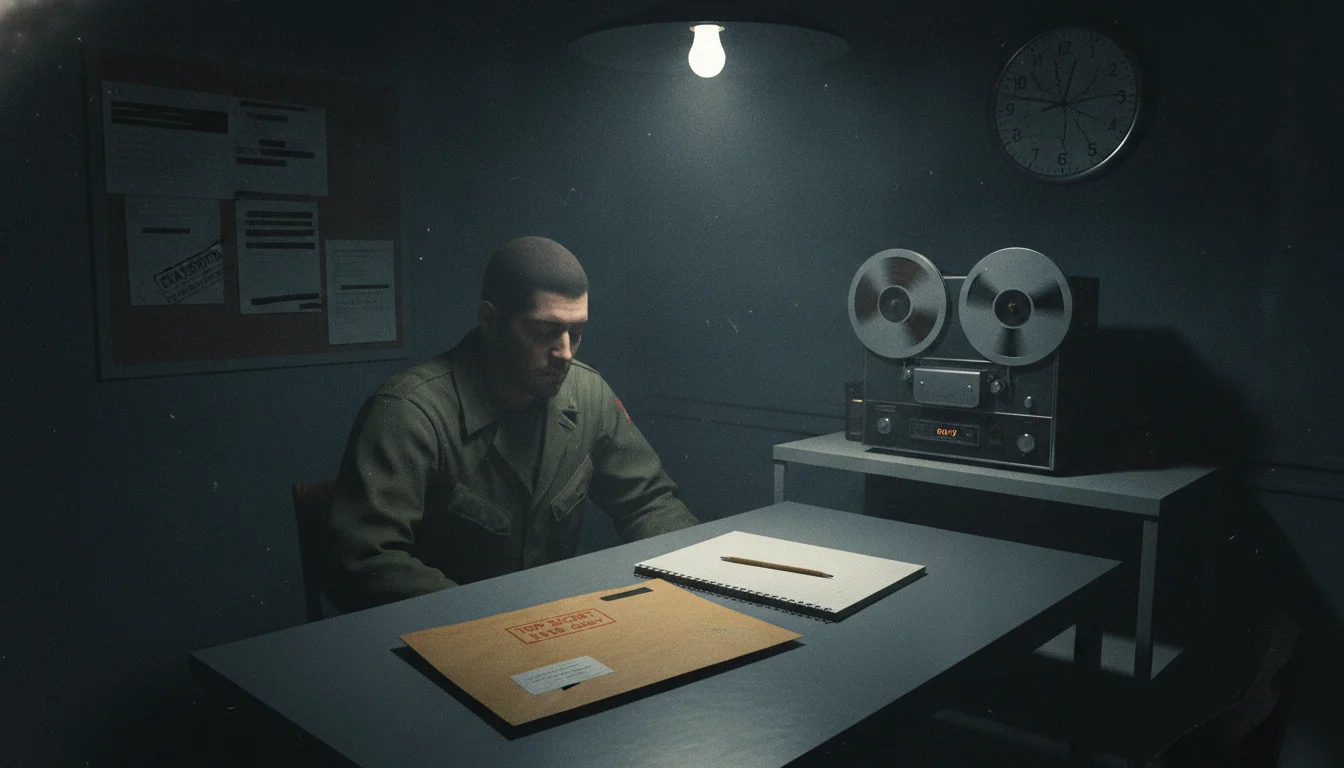
In April 1953, CIA Director Allen Dulles approved a research program built on a genuinely unsettling premise: that the human mind could be broken down, drugged, or conditioned into serving someone else's purposes. The program was called MKUltra. The "MK" was simply the CIA's standard prefix for projects run out of its Technical Services division; what "Ultra" was meant to evoke is something historians still argue about. For roughly two decades the program operated with almost no outside oversight, no consent forms, and no accountability to any court outside the agency. It funded LSD experiments on prisoners and psychiatric patients who had no idea what they were being given, hypnosis studies, sensory deprivation research, and at least one covert operation that dosed unsuspecting members of the public with psychedelics while officers watched through a one-way mirror. Most of the paperwork no longer exists. What survives, a cache of roughly 20,000 pages that escaped a 1973 order to destroy the program's records, is the closest thing historians have to a paper trail for one of the strangest research efforts the US government ever ran.
The secret, and why it was hidden
MKUltra was not one experiment but an umbrella for well over a hundred of them, unified by a single question: could the CIA develop a reliable way to control a person's mind or behavior against their will. That covered a lot of ground. Some subprojects looked at truth drugs for interrogation. Others studied whether hypnosis could make a subject perform an act they would normally refuse, or forget an event entirely. Still others tested how isolation, sleep deprivation, and electroshock affected memory and personality.
The program was classified for reasons that went beyond ordinary intelligence secrecy. Its methods involved administering psychoactive drugs to American and Canadian citizens who never consented and, in many documented cases, never even knew they had been dosed. Doing this to unwitting subjects on domestic soil, let alone funneling it through university and hospital contracts under false pretenses, was the kind of thing an agency does not want turning up in a congressional hearing. It did not, for two decades. Then it did.
The Cold War fear behind it
MKUltra grew out of a very specific anxiety. American prisoners of war in Korea had, in some well-publicized cases, denounced the United States or falsely confessed to war crimes after captivity, and US officials worried this reflected genuine "brainwashing" techniques developed by Soviet, Chinese, or North Korean intelligence services. CIA officials, including Richard Helms, argued the agency needed its own research program to understand and, if possible, replicate whatever the other side had supposedly figured out, before it was used against American operatives or officials. Dulles signed off, and the program was placed under the agency's Technical Services division, with Sidney Gottlieb as its chief chemist and de facto director.
The Cold War framing mattered because it let MKUltra's architects treat the research as a defensive necessity rather than an offensive weapons program, at least on paper. In practice, the surviving files show research that clearly aimed at inducing amnesia, extracting confessions, and manipulating behavior in ways that had obvious offensive applications, whatever the internal justification.
Inside the operation
The Church Committee later identified at least 149 separate MKUltra subprojects, run through roughly 80 universities, hospitals, prisons, and pharmaceutical companies, often funded through front organizations so that the researchers themselves did not know the CIA was the source of their grant money. Some subjects were prisoners offered reduced sentences or drugs in exchange for participation. Others were psychiatric patients who could not meaningfully consent to anything.
One such front, commonly cited in histories of the program, operated under the name the Society for the Investigation of Human Ecology, and used the cover of legitimate-sounding behavioral research to channel money toward MKUltra subprojects at otherwise unwitting universities and medical centers.
One of the better documented threads involved safehouses in San Francisco and New York, run under CIA officer George Hunter White with Gottlieb's oversight, where paid sex workers lured men back to an apartment where their drinks were secretly spiked with LSD. Officers observed the effects through a one-way mirror, testing how the drug affected men who had no idea they were part of an experiment. Historians commonly refer to this thread as Operation Midnight Climax.
Another documented case centers on a Scottish-born psychiatrist who ran experiments at a psychiatric institute in Montreal in the mid-to-late 1950s, using drug-induced sleep, repeated taped messages, and electroshock in an attempt to erase and rebuild patients' personalities, a method he called psychic driving. Some of that research was reportedly funded through an MKUltra subproject. Canadian survivors and their families later pursued legal claims against the CIA, and some received compensation, decades after the fact.
Frank Olson and the human cost
The clearest illustration of what MKUltra could do to an unwitting participant is the case of Frank Olson, an Army biochemist working at Fort Detrick in Maryland. In November 1953, Olson attended a retreat with CIA and Army colleagues where Gottlieb secretly dosed his drink with LSD, without telling him. Olson reportedly grew disturbed and paranoid in the days that followed. Roughly a week later, he fell to his death from a high floor of a New York hotel room while under CIA supervision.
For more than two decades, the Olson family was told only that Frank had suffered a breakdown and jumped. In 1975, as revelations about CIA abuses surfaced through a presidential commission, the family learned the truth about the secret dosing, and soon after received a formal apology along with a settlement. A 1994 exhumation, requested by his sons, found evidence some forensic examiners argued was more consistent with a blow to the head than with an accidental fall, though the case was never definitively resolved as anything other than an unexplained death. It remains one of MKUltra's most disputed and most human costs.
How it came to light
MKUltra's exposure did not happen all at once. Journalist reporting in 1974 on domestic CIA surveillance triggered a presidential commission and, in 1975, the Senate's Church Committee, chaired by Senator Frank Church, which investigated a broad range of intelligence agency abuses. CIA officials, including Director William Colby, confirmed the program's existence and its use of drugs on unwitting subjects, and the Olson case became public that year.
The fuller documentary picture only emerged after outgoing CIA Director Richard Helms ordered most MKUltra records destroyed in 1973, ahead of the scrutiny he clearly anticipated. What kept the story alive was an accident of filing: a cache of roughly 20,000 pages of budget and administrative records had been stored separately from the operational files Helms targeted, and survived. Researchers found them through a Freedom of Information Act request in 1977, prompting a fresh round of Senate hearings that year in which CIA Director Stansfield Turner testified about a program the agency had, in effect, already tried to erase.
The legacy
MKUltra's exposure helped push the US toward the modern rules governing human subject research, including the requirement that researchers obtain informed consent before testing drugs or procedures on people, a standard that was largely absent from federal practice when Gottlieb's subprojects began. It also fed a permanent, and not entirely unreasonable, public suspicion of the CIA's domestic activities that outlasted the Cold War itself. Decades later, MKUltra remains a reference point every time a new conspiracy theory needs a real historical program to anchor itself to, precisely because the real program was strange enough that almost any embellishment sounds plausible next to it.
What the files say, and what still isn't there
The surviving record confirms the shape of MKUltra clearly enough: a CIA-authorized program running from the early 1950s into the early 1970s, organized into roughly 149 subprojects, targeting unwitting American and Canadian citizens with drugs, hypnosis, and psychological manipulation, in the name of Cold War competition with rival intelligence services. That much is documented, not speculation.
What the files do not settle is nearly as important. Because Helms's 1973 order destroyed most detailed research reports, historians working from the surviving budget records often cannot say exactly what happened in many individual subprojects, who the test subjects were, or how far some of the more extreme research actually went. The full scope of MKUltra, in other words, is not classified so much as gone. What is left is a partial ledger of a program the CIA tried very hard to make sure no one would ever fully reconstruct, and mostly succeeded.
MKUltra was not the only Cold War program the CIA built and later tried to keep buried: see how Operation Paperclip quietly brought Nazi-era scientists into US government service, or how the Pentagon Papers exposed a different agency's decades of hidden decision-making.
Quick Answers
Common questions about this topic
Was MKUltra real?
Yes. It was a real, CIA-authorized program that ran from the early 1950s into the early 1970s, confirmed by surviving CIA documents and by 1975 Church Committee testimony from agency officials, including then-Director William Colby.
What was the goal of MKUltra?
To find drugs and techniques, mainly LSD, hypnosis, and sensory deprivation, that could control behavior, aid interrogation, or induce amnesia, driven by Cold War fears that Soviet, Chinese, and North Korean agents had already mastered similar methods.
Who ran MKUltra?
It was authorized by CIA Director Allen Dulles in April 1953 and run day to day by Sidney Gottlieb, the chief chemist of the agency's Technical Services division, through a network of roughly 149 subprojects at universities, hospitals, and prisons.
Is any of MKUltra still classified?
Most of the operational files were destroyed in 1973 on the order of outgoing Director Richard Helms. Around 20,000 pages of budget and administrative records survived by accident, but full research reports, subject names, and the exact scope of many subprojects remain unknown rather than officially withheld.

Interrogate the Spymasters
Chat with the agents and analysts the files were about.
Create your free account →No card required. Some figures and features require a paid plan.
Join the HistorIQly Club
Get smarter about the past.
Weekly stories, deep dives, and exclusive content straight to your inbox.