The Final Hours of Napoleon on Saint Helena
Napoleon spent nearly six years in exile before a slow death, and a hair test decades later reignited an old poisoning theory.
Read Wikipedia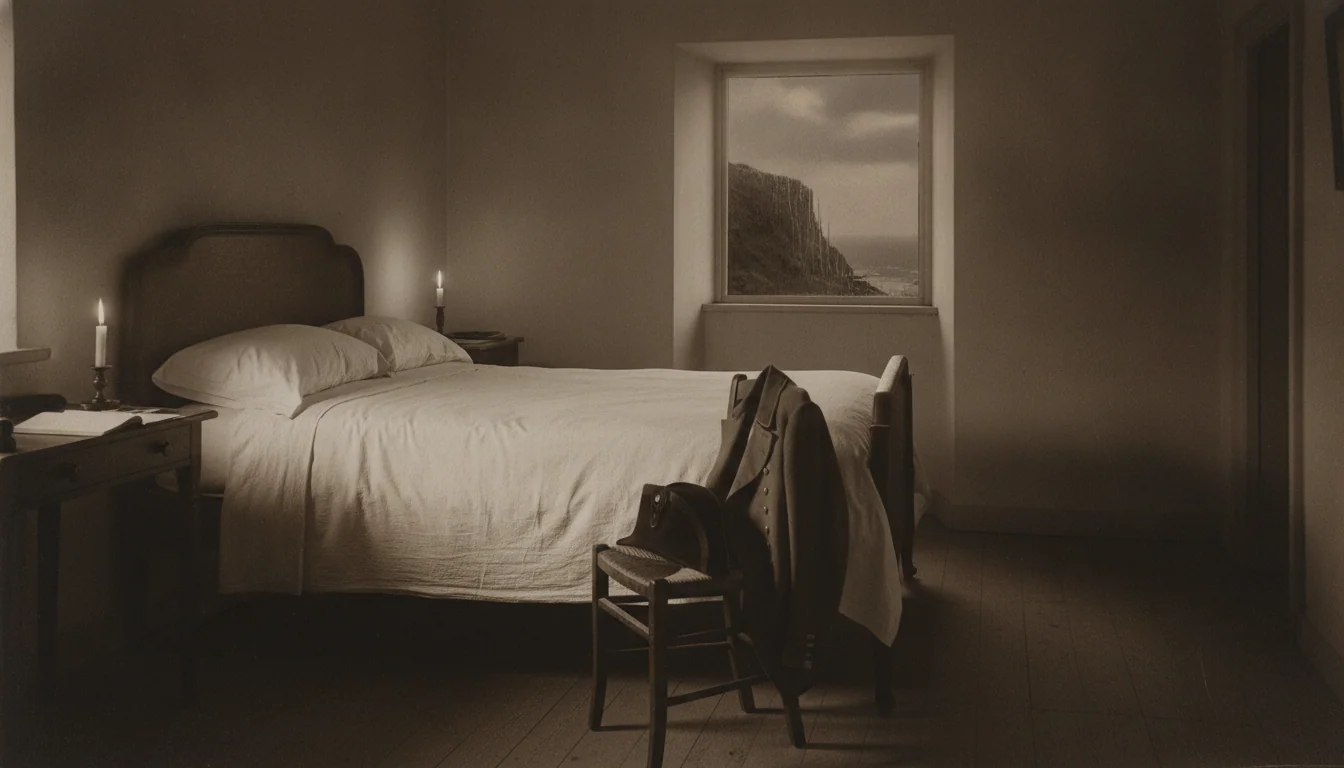
By the time Napoleon Bonaparte reached the last months of his life, he had already outlived three empires' worth of ambition. The man who had crowned himself, redrawn the map of Europe, and marched an army into Russia was, by early 1821, a heavyset, increasingly bedridden exile, nothing like the diminutive caricature history remembers him as, confined to a damp house on a volcanic rock in the middle of the South Atlantic. He had been there for nearly six years. He would not leave it alive.
Exile on a rock in the ocean
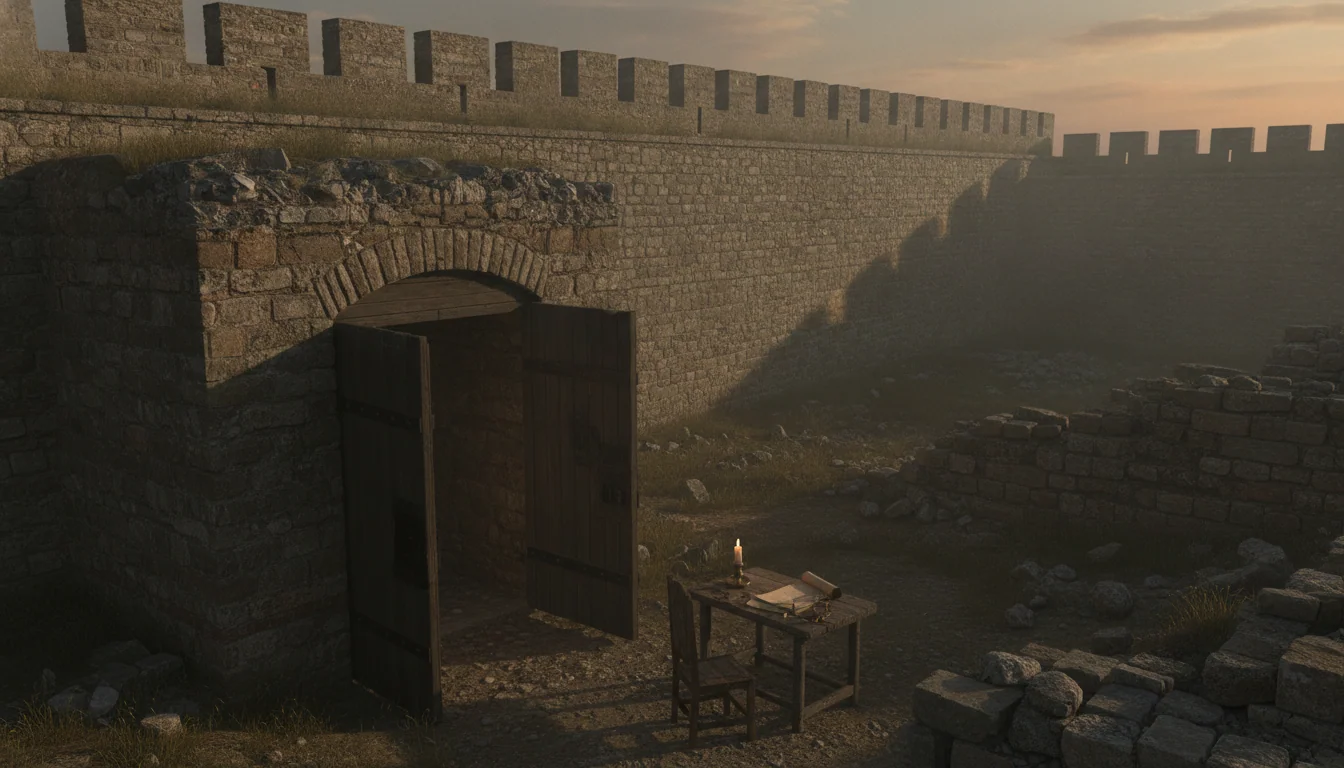
After his defeat at Waterloo in June 1815, Napoleon surrendered to the British rather than risk capture by the vengeful Prussians or the restored Bourbon monarchy, which had every reason to want him gone for good. The British government, unwilling to repeat the mistake of his first exile on Elba, from which he had escaped and returned to power within a year, chose an island in the middle of the South Atlantic, well over a thousand miles from the nearest coastlines of Africa and South America alike. Saint Helena had no such escape route. Napoleon arrived in mid-October 1815 aboard HMS Northumberland and was eventually settled at Longwood House, a converted farm building exposed to wind, damp, and, according to his own complaints, rats.
His British jailer for most of the exile was Governor Hudson Lowe, a rigid administrator who treated every request from his prisoner as a potential security threat and every title Napoleon claimed, "Emperor," as a fiction to be denied. The relationship between the two men curdled almost immediately and never recovered. Napoleon spent his days dictating memoirs to a small circle of loyal companions, gardening, reading, and, increasingly as the years wore on, complaining of stomach pain.
The turning point
By 1820, Napoleon's health had visibly declined. He suffered from persistent nausea, vomiting, and abdominal pain that came and went in waves, along with swelling in his legs and a general loss of vigor in a man who had once ridden across half a continent. His personal physicians disagreed about the cause, some suspecting liver disease, others a chronic stomach ailment. Napoleon himself suspected something worse. His father, Carlo Buonaparte, had died of stomach cancer at a relatively young age, and Napoleon told his household more than once that he expected to go the same way.
By March 1821, he was spending most of his days in bed. He grew too weak to walk in the garden he had once tended obsessively. In mid-April, he began dictating a formal will, distributing what remained of his fortune among his family, his servants, and old comrades from the army, adding codicils over the following days. It was around this point, by the account of those closest to him, that the household stopped hoping for recovery and began preparing for a death.
The final hours
Through late April and into the first days of May, Napoleon drifted between lucidity and delirium, wracked by vomiting that his doctors could not control. On May 3, he made his last confession and received extreme unction, the Catholic rite for the dying, from Abbe Ange Vignali, a Corsican priest who had been sent to the island to attend him. Present in the room over these final days were his loyal aides Henri-Gatien Bertrand and Charles-Tristan de Montholon, his valet Louis Marchand, and his physician on the island, the Corsican-born Francesco Antommarchi, along with a British army doctor, Archibald Arnott, who had been permitted to examine him.
By May 4, Napoleon was largely unresponsive, occasionally murmuring words that those at his bedside strained to catch. Marchand and others later reported fragments including references to France, the army, the head of the army, and his first wife, Josephine, who had died years earlier. These fragments were stitched together after the fact into a tidier final sentence than any single witness actually recorded in the moment, and historians treat the popular version of his last words with real caution.
Island tradition holds that a violent storm swept over Saint Helena on the night of May 4 into May 5, strong enough to uproot a large willow tree near Longwood House that Napoleon had been fond of sitting beneath. No contemporary weather record confirms the story in detail, and it may owe something to the human instinct to want nature to mark a great man's passing. What is documented is that Napoleon's breathing grew shallow and irregular through the day of May 5, watched over by the small circle of French companions who had shared his exile, and by the British doctor at his bedside.
The end
Napoleon Bonaparte died at Longwood House on May 5, 1821, at around 5:49 in the evening, according to the timing recorded by Antommarchi, though other accounts in the room place it within a few minutes either side. He was 51 years old. He had spent five years and seven months as a prisoner on Saint Helena, roughly a tenth of his life, confined to an island most of his subjects would never be able to find on a map.
The autopsy took place the following day, May 6, conducted by Antommarchi with British military physicians present as witnesses, a joint arrangement meant to satisfy both French demands for an independent finding and British insistence on an official record. The examination found extensive ulceration and what the doctors described as a cancerous condition of the stomach, closely resembling the disease that had killed his father. The two sides did not fully agree on every detail of the report, an early sign of a dispute over Napoleon's death that has never entirely gone away.
Aftermath: burial, the tombstone dispute, and the arsenic question
Napoleon had asked to be buried on the banks of the Seine, among the French people he said he had loved so well. The British refused to release the body from Saint Helena, and he was instead buried in a shaded ravine on the island then known as Sane Valley, in a grave lined with stone and sealed with heavy slabs, guarded for years afterward. Even the headstone became a point of conflict: his French companions wanted it to read simply "Napoleon," in keeping with an emperor who needed no surname, while Hudson Lowe insisted on "Napoleon Bonaparte." Neither side yielded, and the grave went unmarked for the nineteen years it remained on the island. In 1840, with tensions long since cooled, France arranged for his remains to be exhumed and returned home in a ceremony known as the Retour des Cendres. He was eventually laid to rest beneath the dome of Les Invalides in Paris, where he lies today.
The stomach cancer verdict held as the accepted explanation for well over a century. Then, in the 1960s, a Swedish researcher named Sten Forshufvud examined hair samples preserved from Napoleon's head, taken as keepsakes by members of his household after his death, and found arsenic levels many times higher than would be expected from ordinary exposure. The finding fed a theory, popularized in books through the 1980s, that Napoleon had been slowly poisoned, potentially by someone inside his own small circle acting in the interests of the restored French monarchy, which had every reason to fear his return.
The theory has never gone away, and it resurfaces every few years in documentaries and popular histories, for a simple reason: it is a genuinely dramatic idea, and the isolation of Saint Helena, combined with the real hostility between Napoleon's household and his captors, makes a slow poisoning feel entirely plausible on its face. But later research complicated the picture considerably. When scientists tested hair samples from earlier points in Napoleon's life, including his childhood and his years of power, they found similarly elevated arsenic levels throughout, long before anyone had a motive to poison him. That pattern points toward routine 19th-century exposure rather than deliberate murder: arsenic-based dyes, including the green pigment used in wallpaper and fabric of the period, along with arsenic-laced tonics and medicines that were common at the time, could account for a lifetime of elevated readings with no killer required.
What actually killed Napoleon likely remains what his own doctors, and his own instincts, told him it was: a stomach disease that ran in his family and had already claimed his father. The arsenic in his system was probably real, ambient, and largely beside the point. But the story endures because it captures something true about the exile itself, an emperor surrounded by a handful of loyal, resentful, and closely watched companions on an island from which no one could ever fully leave, where suspicion had nowhere to go but inward.
Quick Answers
Common questions about this topic
What were Napoleon's last words?
Accounts from those at his bedside describe him murmuring fragments in his final delirium, commonly rendered as "France, army, head of army, Josephine." No single reliable witness recorded a clean deathbed statement, and the phrase should be treated as a reconstruction rather than a verified quotation.
How did Napoleon die?
The autopsy performed the day after his death, on May 6, 1821, found extensive stomach disease and concluded the cause was gastric cancer, the same illness that had killed his father. That verdict remains the most widely accepted explanation among historians.
Why do people think Napoleon was poisoned with arsenic?
In the 1960s, tests on preserved locks of his hair showed arsenic levels far above modern norms, feeding a theory that a member of his household poisoned him slowly. Later research found similarly elevated arsenic in hair from earlier, unexceptional periods of his life, which points instead to ordinary 19th-century exposure through arsenic-based dyes and common tonics and medicines rather than murder.
How long was Napoleon exiled on Saint Helena?
He arrived in mid-October 1815 and died on May 5, 1821, so his confinement lasted just short of six years, all of it spent at or near Longwood House on the remote South Atlantic island.

Ask Them About the End
Chat with historical figures about their final days, in their own words.
Create your free account →No card required. Some figures and features require a paid plan.
Join the HistorIQly Club
Get smarter about the past.
Weekly stories, deep dives, and exclusive content straight to your inbox.