House of Gucci vs. History: How Accurate Is Ridley Scott's Murder Drama?
House of Gucci accuracy, checked: Ridley Scott's film covers the 1995 murder of Maurizio Gucci. Patrizia Reggiani says Lady Gaga got her wrong. Here's what history says.
Read Wikipedia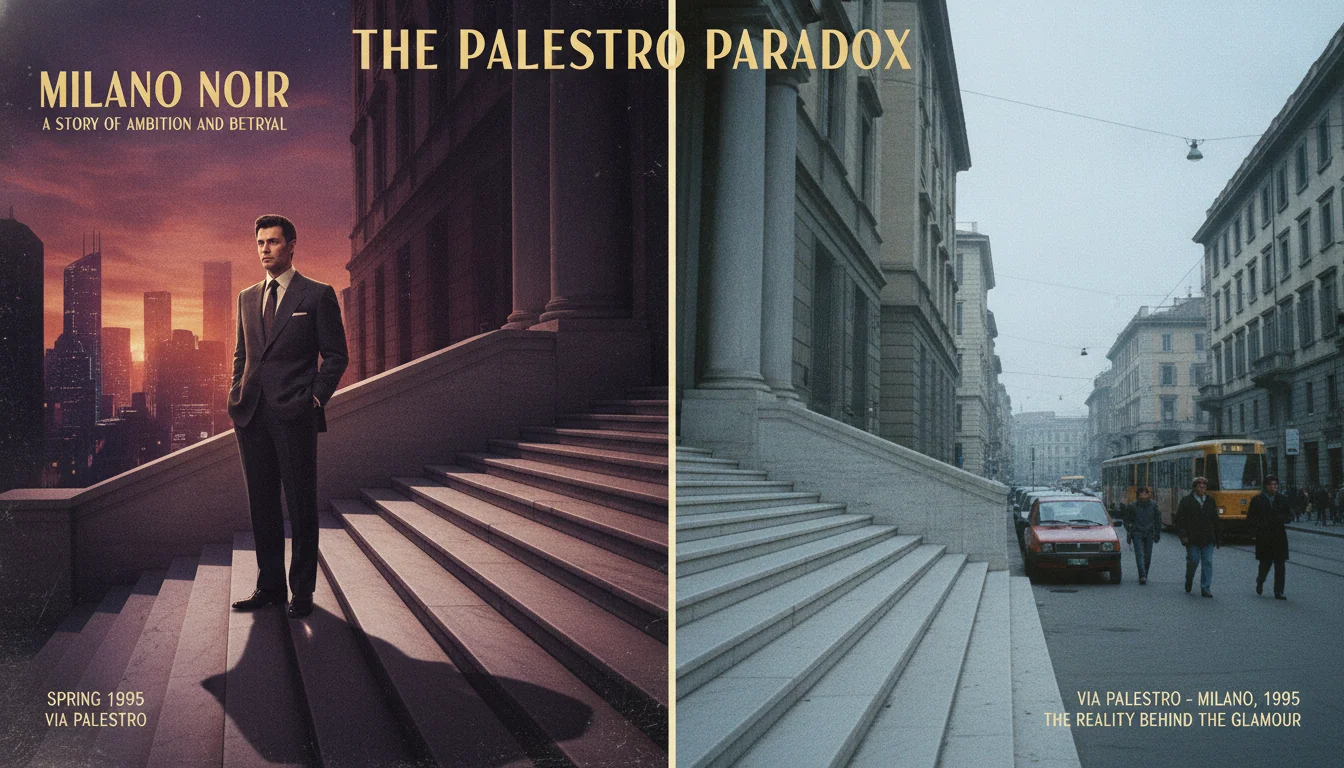
Ridley Scott's House of Gucci arrived in 2021 with one of the more flamboyant casts assembled for a prestige fashion murder: Lady Gaga as the calculating Patrizia Reggiani, Adam Driver as the doomed Maurizio Gucci, Al Pacino as his self-made patriarch uncle Aldo, and Jared Leto under so much prosthetic makeup as Paolo Gucci that his own mother could be forgiven for not recognizing him. The source material was Sara Gay Forden's deeply reported 2001 book, The House of Gucci, which spent years interviewing everyone involved who would talk. The film took the book's factual architecture and dressed it in Scott's operatic instincts.
The result is a film that gets the murder, the milieu, and much of the family dynamic essentially right while inventing freely around the edges. Patrizia Reggiani, who served eighteen years in prison for commissioning her ex-husband's assassination and was released in 2016, watched the film and announced that Lady Gaga had gotten her wrong. She was not entirely incorrect.
What the film gets right
The murder itself
On the morning of March 27, 1995, Maurizio Gucci arrived at his Milan office at Via Palestro 20. As he climbed the front steps, a man named Benedetto Ceraulo emerged from behind him and shot him four times with a .357 Magnum revolver. Ceraulo then shot the building's porter, Giuseppe Onorato, who tried to intervene and survived.
The film's depiction of the killing - outdoor steps, Milan street, sudden gunfire - is essentially accurate to what trial testimony and police reconstruction established. Ceraulo was a small-time criminal who had been contacted through an intermediary named Orazio Cicala, who in turn had been hired by Patrizia via her friend and psychic advisor, Giuseppina Auriemma, known as Pina. This chain of intermediaries features in the film and is reconstructed correctly in outline.
The business collapse of the Gucci family
The Gucci story is genuinely one of the more spectacular self-inflicted business disasters of the twentieth century. By the late 1970s, the brand had been diluted almost to worthlessness through rampant licensing - Gucci products appeared on everything from lighters to dog leashes, and the label had lost the exclusivity that luxury brands depend on. The family's internal disputes accelerated the decline.
The film accurately shows Aldo Gucci convicted of tax evasion in the United States - he received a one-year federal prison sentence in 1986, a fact almost too cinematic to be true - and the role of Paolo Gucci in cooperating with prosecutors against his father. It also correctly shows Maurizio ultimately buying out his relatives' shares of the company with financial backing from the Bahrain-based Investcorp group, and the eventual complete exit of the Gucci family from the business they founded.
The Rome and Milan settings
The film's production design captures the stratospheric wealth of the Gucci orbit in the 1980s and early 1990s with reasonable fidelity. The St. Moritz winters, the Milan apartments, the New York trips - the geographical and material texture of the family's life is accurately staged. The real Patrizia and Maurizio did live in Geneva for a period before their marriage deteriorated. The divorce was real, bitter, and financially contested.
What the film gets wrong
Patrizia's voice and manner
This is where Patrizia herself objected most loudly. Lady Gaga performs Patrizia as a calculating, almost theatrically cold social climber who works out her manipulation explicitly and consciously. Patrizia Reggiani, in interviews before and after the film's release, has presented herself as a passionate, even impulsive woman who loved Maurizio genuinely and was destroyed by his abandonment of her and their daughters.
Who is right is partly unanswerable. Courts found Patrizia guilty; she later told an interviewer she didn't pull the trigger herself because her eyesight was too poor. Whether this was attempted wit or genuine explanation is a matter of interpretation. But the character Gaga plays is a deliberate construction that leans toward cold scheming in ways the real Patrizia disputes.
The accent question is more straightforward. Gaga plays Patrizia with an Italian accent that fluctuates in consistency. The real Patrizia, a Milanese woman who moves in international circles, sounds different. This is a minor complaint in a film where everyone sounds like they're auditioning for a different Ridley Scott film simultaneously.
The Paolo Gucci problem
Jared Leto's Paolo Gucci is the film's most contentious departure from the historical record. The real Paolo Gucci was difficult, contentious within the family, and did cooperate with the IRS against his father. But the film's version - grasping, dim, perpetually humiliated, speaking in a caricature that falls somewhere between pantomime villain and tragicomic buffoon - goes well beyond what documented accounts support. The character functions more as grotesque comic relief than as a portrait of an actual person, and it drew criticism from people who knew the family.
The timeline compression
The events the film covers span roughly twenty years, from Patrizia and Maurizio's meeting in the late 1970s to the 1995 murder. Scott compresses this into what feels like a few intense years. Maurizio and Patrizia met when she was the daughter of a transport company owner, not a wealthy heiress, and the courtship took time. Their marriage lasted longer and was more genuinely complicated than the film allows. The deterioration of the relationship and Maurizio's eventual departure for a younger woman - Paola Franchi - is depicted but given less weight than the business machinations.
Rodolfo Gucci's resistance to the marriage
The film shows Rodolfo Gucci, Maurizio's father, objecting to Patrizia as a social inferior and eventually disinheriting Maurizio over the marriage. The disinheritance element is real: Rodolfo did cut Maurizio off temporarily. But the film frames Rodolfo's objections as primarily about class, where documented accounts suggest they were more specifically about Rodolfo's suspicion - which proved accurate - that Patrizia was more interested in the Gucci name and fortune than in his son.
Rodolfo Gucci was himself a former film actor who appeared in Italian cinema under the name Maurizio d'Ancora in the 1930s and 1940s. The film does not explore this dimension of his character, which is a small loss: a man who built an identity around one kind of performance would have recognized the performance in Patrizia more easily than the film's portrayal suggests.
What the film omits entirely
The film does not substantively address the role of Paola Franchi, the woman Maurizio began a relationship with after separating from Patrizia. Franchi was with Maurizio for several years before his murder and was present at his Milan apartment the night before he was killed. Her experience of the period is entirely absent from a film that portrays Patrizia as the primary emotional center of Maurizio's adult life.
The film also glosses over the divorce proceedings, which were contentious and expensive. Patrizia's legal fight over the settlement is documented in Forden's book as a years-long campaign that consumed a significant portion of the family's financial and legal energy. The film compresses this into a few scenes and moves quickly toward the murder.
House of Gucci Accuracy Score: 6/10
House of Gucci functions as what it is: a prestige crime drama in the vein of Goodfellas or The Alto Knights, one that uses documented events as scaffolding for a broader story about wealth, vanity, and family self-destruction. The murder is accurate. The business history is substantially correct. The characterizations are dramatized to varying degrees, and Jared Leto's Paolo is essentially a fictional creation inhabiting a real name.
What the film does well is capture the specific texture of Italian luxury fashion in the Aldo Gucci era - the combination of old-world craft and nouveau riche excess that made Gucci both magnificent and ridiculous. The family's inability to see what was happening to their brand until it was almost too late is the real tragedy embedded in the story, and Scott's film, underneath all the performance, captures that clearly enough.
Historical accuracy: 6/10. The skeleton is solid. The flesh is Ridley Scott's.
Quick Answers
Common questions about this topic
Was Maurizio Gucci really murdered on the steps of his office?
Yes. Maurizio Gucci was shot and killed on March 27, 1995, on the steps of his office at Via Palestro 20 in Milan. He was shot four times. The film reconstructs this accurately, including the Milan street setting.
What did Patrizia Reggiani think of the film?
Patrizia Reggiani was publicly critical of Lady Gaga's portrayal, saying Gaga came across as too masculine and that she should have spoken to her before filming. She also objected to the accent and general characterization. She had served 18 years in prison for commissioning the murder and was released in 2016.
Did Aldo Gucci really go to prison?
Yes. Aldo Gucci, played by Al Pacino in the film, was convicted of tax evasion in the United States in 1986 and sentenced to one year in federal prison. His son Paolo had cooperated with the IRS investigation against him, which is depicted, though the film exaggerates the comic dimensions of their relationship.
How accurate is the film's portrayal of the Gucci business disputes?
The broad strokes are accurate: real family conflict over the direction of the brand, Maurizio eventually buying out other family members with backing from the Bahrain-based Investcorp group, and the eventual sale of the family's remaining stake. The film compresses timelines and invents or embellishes several scenes for dramatic effect.

Debate the Accuracy with the Real Figures
Ask the real people what Hollywood got wrong about their lives.
Create your free account →No card required. Some figures and features require a paid plan.
Join the HistorIQly Club
Get smarter about the past.
Weekly stories, deep dives, and exclusive content straight to your inbox.