Cope vs. Marsh: The Bone Wars That Built American Paleontology
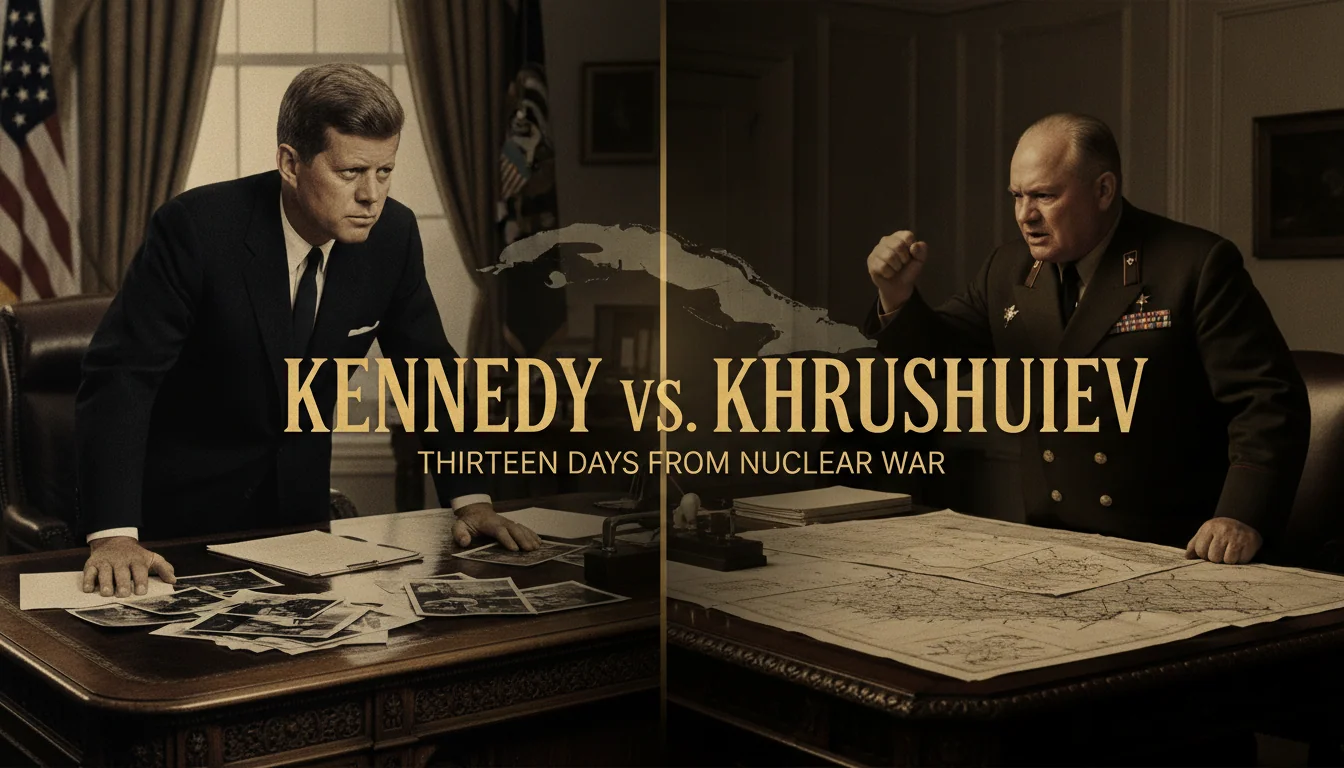
Edward Drinker Cope and Othniel Charles Marsh went from friendly colleagues to bitter rivals, racing to name new dinosaurs and wrecking each other's reputations along the way.
Read Wikipedia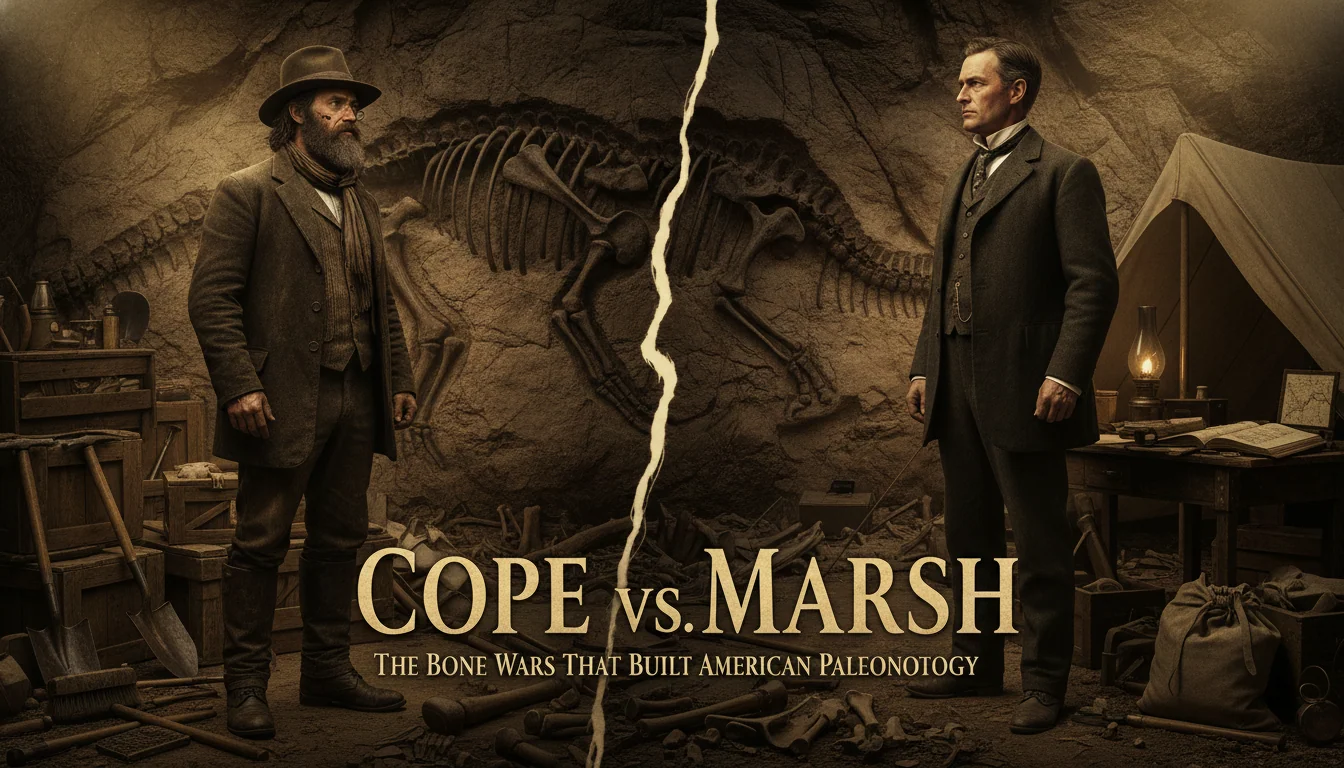
In the spring of 1890, readers of the New York Herald got to watch two of America's most prominent scientists publicly accuse each other of fraud, incompetence, and theft, in a front-page series that read less like a science story than a divorce filing. The men doing the accusing were Edward Drinker Cope and Othniel Charles Marsh, and by that point they had spent nearly two decades trying to bankrupt, out-dig, and humiliate each other across the fossil beds of the American West. Along the way, in what came to be called the Bone Wars, they gave the world most of the dinosaurs anyone can actually name.
The Stakes
What Cope and Marsh were fighting over, on paper, was straightforward: who could find, excavate, and formally describe the largest number of new prehistoric species first. In the 1870s and 1880s, the American West was being cracked open by railroad construction and government survey expeditions, and it was turning up an almost unbelievable trove of fossils, whole skeletons of animals no scientist had ever seen. Being first to publish a scientific description of a new species meant your name was attached to it permanently. For two men with outsized egos and genuine scientific ambition, that was worth almost any cost.
Underneath the scientific stakes sat something pettier and more personal. Cope and Marsh had once been on cordial terms, corresponding as colleagues and even naming species after each other early in their careers. That collegiality did not survive an incident in the late 1860s, when Cope, working quickly to publish a description of a large fossil marine reptile he called Elasmosaurus, reconstructed its skeleton with the skull mounted on the tail rather than the neck. According to several accounts, it was Marsh who first noticed the error and made sure it became known within the small community of American vertebrate paleontologists. Cope reportedly tried to buy up the print run of the journal in which his mistake appeared, in an unsuccessful attempt to keep it from circulating. The embarrassment never fully healed, and it set the tone for everything that followed.
Cope's Case
Cope deserves to be heard on his own terms, because he was, by any reasonable measure, a brilliant and prolific naturalist. He had independent wealth from a Quaker Philadelphia family, which let him fund his own expeditions without waiting on institutional approval, and his scientific interests ranged far beyond dinosaurs into fish, reptiles, and amphibians, fields in which he published prolifically and is still cited today. Cope worked at a blistering pace, often naming new species within weeks of a specimen reaching his desk, and his personal collection of fossils, later sold to the American Museum of Natural History, remains scientifically significant.
Cope's defenders point out that he was frequently the more agile field scientist of the two, willing to travel to remote and dangerous sites himself rather than relying entirely on hired crews, and that his rapid publication style, whatever its cost to accuracy, reflected genuine excitement about the material rather than mere point-scoring. He also had a personal flair his rival lacked: according to accounts from his later years, Cope was so committed to the argument that human intelligence and anatomy could be studied scientifically that he willed his own skull to science, reportedly proposing that it serve as a type specimen for the human species and daring Marsh to make the same offer. Marsh did not accept the challenge.
Marsh's Case
Marsh's position rested on steadier institutional ground. As a professor at Yale and the de facto head of its Peabody Museum, funded in part by his wealthy uncle, philanthropist George Peabody, Marsh had resources, staff, and a permanent scientific home that Cope's private fortune, however large, could not fully match. Marsh was later appointed the first official paleontologist of the U.S. Geological Survey, a position that gave him federal backing and access that Cope, as a private operator, resented deeply.
Marsh's supporters argue he was the more careful and systematic scientist of the two, more inclined to verify a specimen before rushing a description into print, even if that carefulness sometimes meant losing the race to name a species first. He also built a genuinely capable field operation, sending crews to newly opened fossil beds across Wyoming, Colorado, and Nebraska, including the enormously productive Como Bluff site in Wyoming, and paying his diggers well enough to keep them loyal, at least for a time. Whatever his personal flaws, which were considerable, Marsh built an institution that outlasted the feud itself.
The Clashes
The rivalry played out mostly in the field rather than the lecture hall. Both men sent competing crews to the same fossil-rich sites in the American West, and the competition turned openly hostile: crews reportedly spied on each other's dig sites, tried to poach each other's fossil hunters with better pay, and in some documented instances smashed or buried fossils they could not remove, specifically to keep them out of the rival's hands. Cope and Marsh both used their considerable personal fortunes to bribe railroad workers, quarry operators, and local informants for tips on new fossil discoveries before the other could hear of them.
The feud eventually spilled well beyond the fossil beds. Both men used their positions to attack each other's scientific credibility in journals and at scientific society meetings, and by 1890 the fight became a public spectacle when the New York Herald ran a series of articles in which each man accused the other of plagiarism, theft of specimens, and outright scientific fraud. The public airing of the feud embarrassed the broader American scientific establishment and damaged both men's standing at exactly the moment their reputations should have been at their peak.
The Verdict: Who Won, and What It Cost
By the numbers, Marsh came out ahead. He named roughly 80 new species during the feud's active years to Cope's roughly 56, and he held onto his Yale position and a comparatively stable financial footing until his death in 1899. Cope, by contrast, had sold off much of his personal fossil collection by the end of his life to cover mounting debts, and he died in 1897 in considerably reduced circumstances, working from a cluttered set of rooms in Philadelphia rather than a proper institutional laboratory.
But the numerical win came at a real cost to both men. The public feud consumed fortunes on both sides, funding rushed expeditions and legal disputes over specimen ownership rather than careful science, and it left both reputations tarnished within the scientific community they had each hoped to lead. It's a familiar shape in history's rivalries: like Tesla and Edison's fight over which current would power the modern world, the technical winner and the more romantically remembered figure turned out to be two different men. Marsh secured the institutional legacy, but it is Cope's restless, uneven brilliance that many historians of science find the more sympathetic story.
What neither man could take away from the other, in the end, was the scale of what they had actually built. Between them, Cope and Marsh's rival crews discovered and named more prehistoric species than any two scientists before or since, laying the physical foundation, quite literally, for the modern study of dinosaurs. Marsh won the argument. The fossils they fought over won the argument that mattered more.
Quick Answers
Common questions about this topic
Who won the Bone Wars between Cope and Marsh?
By the numbers, Othniel Charles Marsh won: he named roughly 80 new species to Cope's roughly 56, held a secure position at Yale's Peabody Museum, and served as the first paleontologist of the U.S. Geological Survey. Marsh also died with his finances more or less intact, while Cope had sold off much of his collection and died with far less. Historians generally credit Marsh with the tactical win and Cope with the more colorful, and in some ways more influential, scientific legacy.
What were Cope and Marsh actually fighting about?
Ostensibly, the two men were racing to discover, name, and publish descriptions of new dinosaur and fossil vertebrate species from the American West before the other could. Underneath that, the rivalry ran on wounded pride, professional jealousy, and a personal grudge dating to an embarrassing mistake Cope made early in his career, which Marsh made sure the wider scientific community heard about.
How did the Bone Wars start?
The two were friendly colleagues in the 1860s until Marsh reportedly pointed out, publicly, that Cope had reconstructed a fossil plesiosaur skeleton called Elasmosaurus with its skull attached to the wrong end, mistaking the tail for the neck. Cope tried to buy up and destroy the print run of his own paper to suppress the error, and the humiliation curdled the friendship into a decades-long feud.
How many dinosaurs did Cope and Marsh discover?
Between them, the two men and their field crews named well over 100 new species of dinosaurs and other prehistoric animals during the Bone Wars of the 1870s and 1880s, including genera still taught in schools today: Marsh named Triceratops, Stegosaurus, Allosaurus, and Diplodocus, while Cope named Camarasaurus, Coelophysis, and Dimetrodon.

Hear Both Sides
Chat with history's fiercest rivals and decide who was right.
Create your free account →No card required. Talk to anyone in history with 8 free credits a day. Some features require a paid plan.
Join the HistorIQly Club
Get smarter about the past.
Weekly stories, deep dives, and exclusive content straight to your inbox.