The Yogtze File: The Strange Death of Gunther Stoll
In November 1984, Gunther Stoll wrote the letters YOGTZE on a notepad, said 'Now I've got it,' and drove into the night. By morning he was dying on a rural road.
Read Wikipedia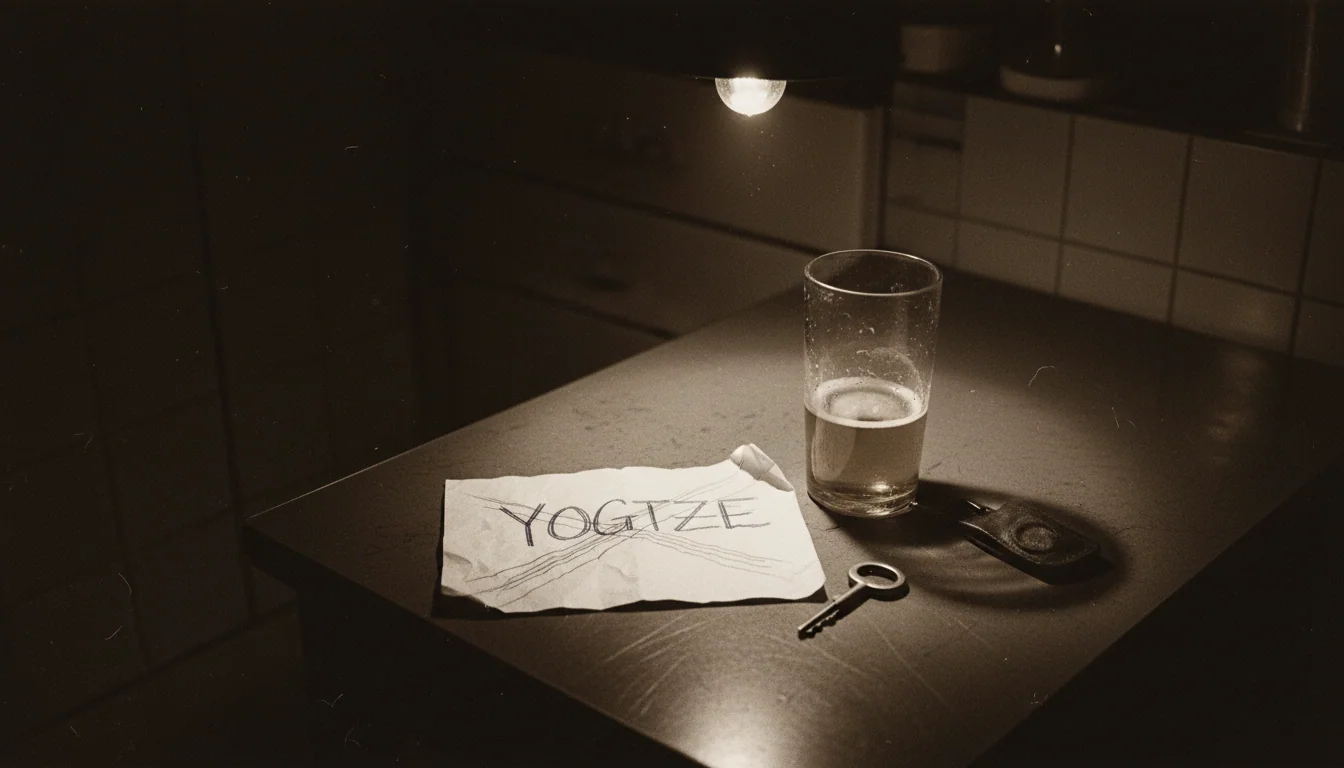
On the evening of November 26, 1984, a young German man named Gunther Stoll sat at his kitchen table in Lower Saxony, lurched forward, and said to his wife: "Jetzt hab' ich's" - "Now I've got it." He grabbed a notepad and wrote six capital letters: YOGTZE. Then he crossed them out. He could not explain what they meant. He left the house and drove into the night.
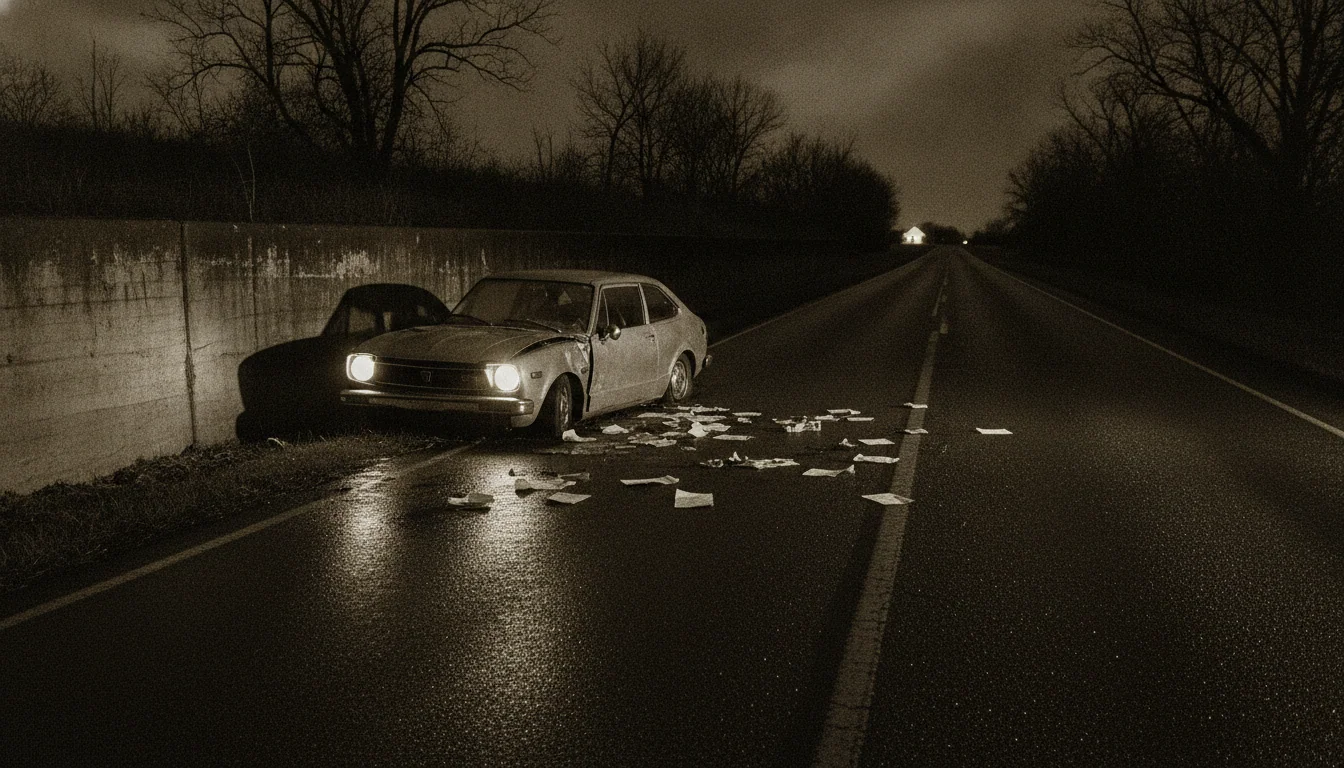
By early the following morning, he was dying on a rural road, his body crushed by injuries that went far beyond what any roadside accident should have produced. The six letters were never explained. The four men seen standing near his car were never identified. The case file has sat open for four decades.
A man coming apart
Stoll's death did not arrive from nowhere. In the weeks before November 26, his behavior had become erratic in ways his wife found frightening. He was convinced that an unnamed party was following him, watching him, doing something to him - though he could never articulate exactly what. His wife described him as tormented by a conviction that his troubles had a specific, identifiable cause, that the answer existed and that he was somehow close to finding it.
The remark "Now I've got it" was spoken as a sudden revelation, a man who had been circling a thought for months and had finally, in that moment, landed on it. He scrawled the letters with urgency. Then he crossed them out, as though reconsidering or as though the act of writing them felt dangerous. His wife asked what he meant. He could not say.
He drove from his home to a pub in a neighboring village, ordered a beer, and spoke to the landlord about the persecution he believed he had been experiencing. Nobody took notes at the time, and the exact content of that conversation was never fully reconstructed. He left sometime after the initial encounter and drove on.
The road and the injuries
The sequence of what happened next is difficult to reconstruct because the timeline was never cleanly established. What is known is that Stoll drove some distance, and that at some point his car was observed in a parking area already showing damage consistent with a collision. He then continued driving, or was driven, to the rural road in Lower Saxony where emergency services eventually found him.
Stoll was inside the vehicle, barely alive. His injuries were severe: multiple fractures and internal damage of a kind that pathologists described as inconsistent with a straightforward single-vehicle accident. The pattern of injury was more consistent with being run over - possibly more than once - than with a crash he had caused himself. He never regained the ability to speak coherently. He died in hospital a few hours after being found.
Four young men were standing near the car when it was discovered. By the time authorities arrived in force, they were gone. No one who saw them could give descriptions reliable enough for an identification. They were never traced. Their presence, at that hour, on that road, beside a dying man's car, has no innocent explanation that investigators ever found satisfying.
The Federal investigation
Germany's Bundeskriminalamt, the Federal Criminal Police Office, investigated the case. They focused on the injuries, the unexplained damage to the vehicle, the four vanished witnesses, and above all on the letters.
YOGTZE is not a German word. It is not a word in any language investigators could identify. It does not correspond to any known organization, location, person, or phrase that Stoll is known to have had any contact with. Investigators with experience in code analysis were consulted. The letters did not resolve into any obvious cipher.
The investigation found no clear suspects. It found no motive that held up against the available facts. The official record describes the cause of death as a road traffic fatality. The circumstances remain unresolved.
The theories
Four main interpretations have circulated since the case gained wider attention in the 1990s.
The license plate theory. German vehicle registration plates of the era used letter combinations that could, under certain formatting conventions, produce sequences resembling YOGTZE. Some investigators proposed that Stoll had witnessed something involving a specific vehicle and had memorized or partially memorized its plate. The word on the notepad might have been a mangled or partially recalled registration, written in a moment of agitated recognition. If true, the plate's owner would be the key to the case. No such registration was ever found.
The acronym theory. YOGTZE could stand for a phrase in German or another language, each letter representing a word. The trouble is that any combination of German words beginning with those letters can be constructed, and none produces a phrase that connects to any known fact in Stoll's life or circumstances. Investigators tried dozens of combinations. None produced a lead.
The personal meaning theory. Stoll had been showing signs of a paranoid belief system in the months before his death. It is possible that YOGTZE was a term meaningful only within his internal world - a name he had privately given to the force or group he believed was persecuting him. If so, the letters document a private delusion rather than an external conspiracy, and decoding them would require access to a mind that no longer exists.
The organized crime or targeted killing theory. The injuries, the vanished witnesses, and the damaged car before the fatal collision have consistently led commentators to suggest that Stoll was killed deliberately. His paranoia, however it appeared, may have had some grounding in reality. He may have stumbled onto something, witnessed something, or known something that someone wanted suppressed. The "Now I've got it" moment may have been real. The connection he made may have been accurate. And someone may have ensured it died with him.
None of these theories can be ruled out. None of them has evidence strong enough to compel a conclusion.
Four decades of silence
The case received renewed international attention in the early 2010s when European true-crime journalism began circulating it online. By then the BKA file had been open for almost thirty years without resolution. Forensic techniques that did not exist in 1984 were applied to the case, but little usable material had been preserved from the original scene.
The four men near the car remain unknown. The word on the notepad remains unexplained. Gunther Stoll's widow, who was the first person to whom he said "Now I've got it," has said in later years that she does not know what the letters meant and doubts she ever will.
The case is sometimes described as one of the strangest unsolved mysteries in German criminal history. The description is accurate, and it understates the problem. Most cold cases have a suspect, a motive, or at least a legible crime. The Yogtze file has a dead man, a word with no meaning, and four people who vanished from a dark road in Lower Saxony and have never been seen again.
The letters remain exactly as Stoll wrote them, and crossed them out, in the kitchen of his house on the last evening of November 26, 1984.
For related unsolved mysteries, see The Kaspar Hauser Mystery and The Flannan Isles Lighthouse Mystery.
Quick Answers
Common questions about this topic
What does YOGTZE mean?
Nobody knows. The letters YOGTZE have never been definitively decoded. Proposed interpretations include a partial German vehicle registration plate, an acronym for an unknown phrase or organization, a word from Stoll's personal paranoid belief system, or a completely private notation whose meaning died with him.
Who was Gunther Stoll?
Gunther Stoll was a 26-year-old food technician from Lower Saxony, Germany. In the months before his death in November 1984, he had been exhibiting signs of paranoia, telling friends and family that an unnamed group were harassing him and that something was being done to him.
Was Gunther Stoll's death ruled a murder?
The cause of death was severe traumatic injuries consistent with being run over by a vehicle. The official conclusion pointed to a road traffic accident, but the circumstances - especially four unidentified witnesses near the scene and injuries that pathologists found inconsistent with a simple crash - have kept the case open to other interpretations.
Were the four men near the scene ever identified?
No. Four young men were seen standing near Stoll's vehicle shortly before emergency services arrived. None were ever traced. Their presence near a dying man on an isolated road at that hour, and their complete disappearance afterward, is one of the most disturbing aspects of the case.

Want to Interrogate the Suspects?
Chat with historical figures and uncover the truth behind history's greatest mysteries.
Create your free account →No card required. Some figures and features require a paid plan.
Join the HistorIQly Club
Get smarter about the past.
Weekly stories, deep dives, and exclusive content straight to your inbox.