The Great Plague of London: The Last Great Outbreak and the Year Pepys Watched a City Empty
The Great Plague of London killed tens of thousands in 1665. Here is what Londoners believed caused it, what the doctors tried, and who they blamed.
Read Wikipedia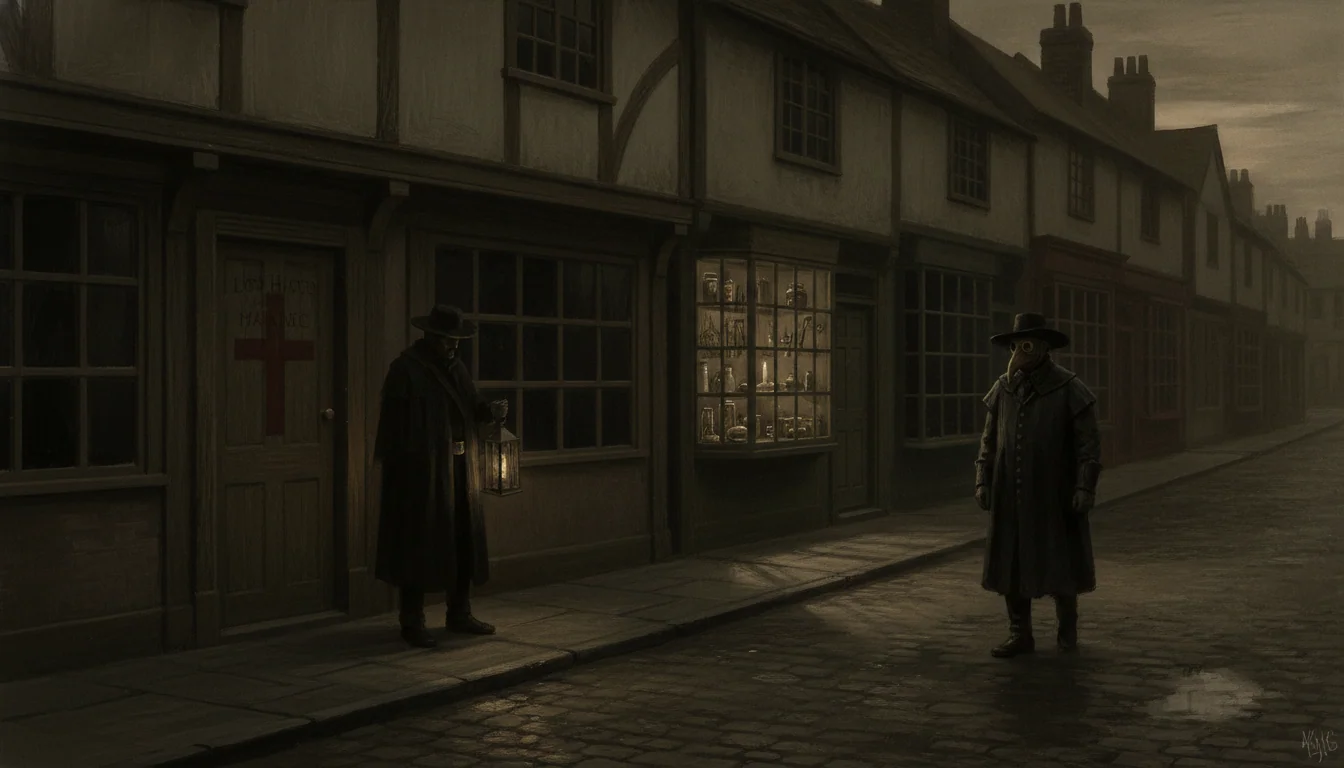
By the summer of 1665, Samuel Pepys, a naval administrator with a habit of recording London's daily life in unsparing detail, was writing about a city he barely recognized. Grass grew in streets that should have been crowded with traffic. Doors were marked with painted red crosses and the words "Lord have mercy upon us." At night, carts rattled through the streets collecting bodies for burial pits dug faster than anyone wanted to think about. England's last great outbreak of bubonic plague had arrived, and it would kill tens of thousands of people before the year was out.
The arrival
Plague was not new to London. The city had suffered repeated outbreaks for centuries, and by the 1660s, most Londoners understood, in a general sense, that hot weather and crowded, filthy conditions seemed to bring the disease with them. The 1665 outbreak is generally traced to parishes in the poorer, more crowded outskirts of the city in the late winter and early spring, spreading through the summer as warmer weather set in, following a pattern contemporaries had seen before but hoped, each time, would not return.
By June, deaths were climbing sharply enough that wealthier Londoners who could afford to leave the city began doing so in large numbers. King Charles II and his court relocated to Oxford. Trade slowed as other towns and even other countries restricted contact with London. Those who remained, largely the poor, tradespeople bound to their shops, and the officials and clergy whose duties kept them in the city, faced a summer that would eventually claim a substantial share of London's population.
What people believed
The dominant medical theory of the day held that disease spread through miasma, corrupted or foul-smelling air rising from filth, standing water, and decaying matter, a theory rooted in ancient medical tradition and taken seriously by physicians of the period. Under this framework, it made sense to burn fires in the streets to purify the air, carry pomanders of sweet-smelling herbs to ward off bad odors, and avoid crowded, poorly ventilated spaces where corrupted air might concentrate.
Alongside miasma theory ran an older and, for many Londoners, more emotionally satisfying explanation: divine punishment. Sermons of the period frequently framed the plague as God's judgment on a sinful city, and the outbreak arrived amid genuine social anxiety, following years of civil war, political upheaval, and religious conflict that many contemporaries were inclined to read as signs of a nation out of favor with providence. Prayer, fasting, and public penance were treated as legitimate responses alongside, not instead of, medical treatment.
What the doctors tried
Physicians who remained in London, and the plague doctors specifically employed by parishes to treat the afflicted poor, worked from a treatment repertoire built on humoral medicine, the ancient theory that health depended on balancing the body's four humors. Bloodletting was common, intended to purge corrupted matter from the body. Lancing and draining the buboes, the swollen, painful lymph nodes that gave bubonic plague its name, was another standard intervention, performed with the belief that releasing the corrupted matter inside them could save the patient, though survival after this procedure was inconsistent at best.
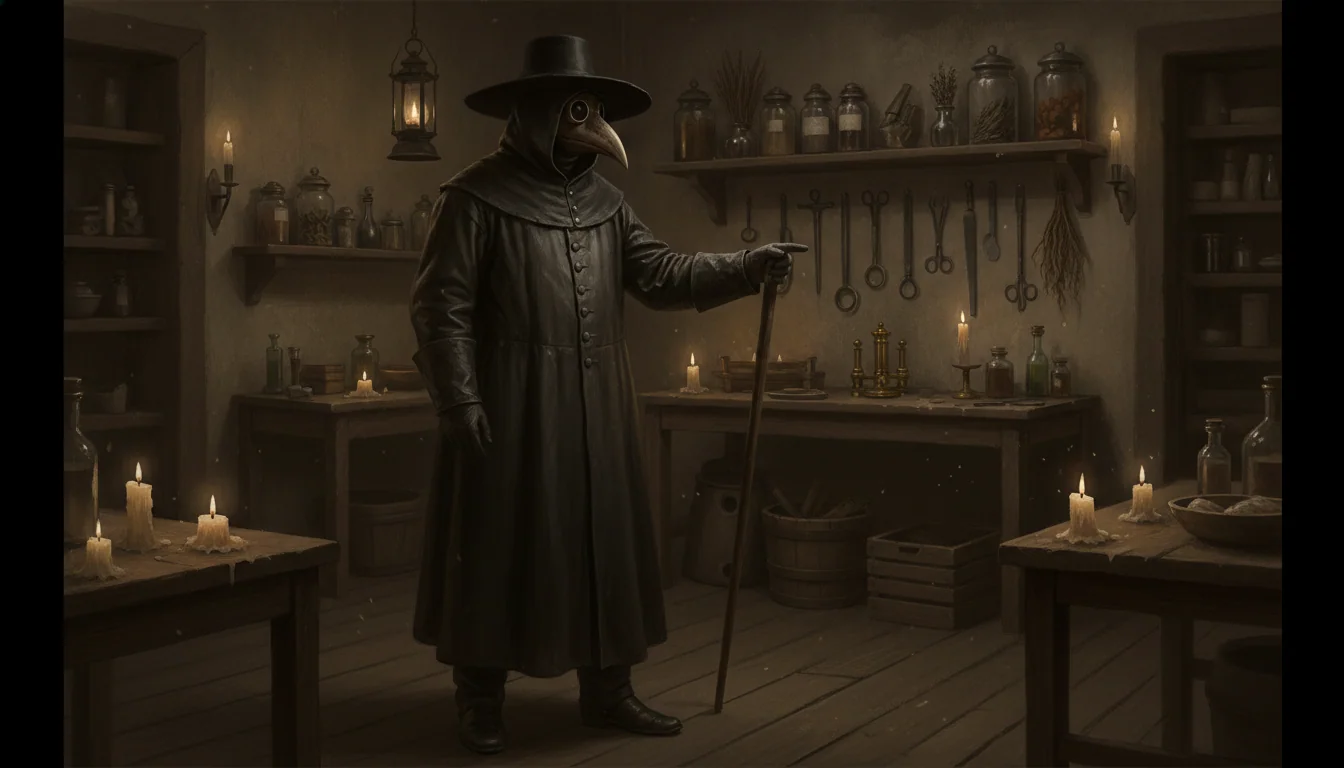
Plague doctors are remembered today largely for their distinctive protective costume: a long waxed or leather coat, gloves, and a beaked mask stuffed with dried herbs, flowers, or spices, worn specifically to filter the miasma the wearer believed carried the disease. Tobacco smoking was also widely believed to offer protection, to the point that schoolchildren in some accounts were reportedly required to smoke as a preventive measure, an instruction that reflects just how seriously the air-based theory of contagion was taken even for the very young.
Herbal remedies, tonics, and treacle compounds, some containing genuinely dozens of ingredients, were sold and administered widely, reflecting both a real desire among physicians to help and a thriving market for remedies of highly uneven quality aimed at a terrified public willing to try almost anything.
Who got blamed
Early in the outbreak, city authorities settled on a specific and, in hindsight, deeply counterproductive scapegoat: cats and dogs. Believing the animals might carry or spread the corrupted air associated with plague, London's authorities ordered mass culls, and thousands of cats and dogs were killed across the city in the outbreak's early weeks. Modern historians and epidemiologists generally view this as one of the great ironies of the outbreak, since removing the city's natural predators of rats, the actual reservoir animal for the plague-carrying fleas, likely did nothing to slow the epidemic and may have made conditions somewhat more favorable for the rat population driving the real spread.
Beyond the animal cull, blame fell disproportionately on the poor and on crowded, disease-prone parishes, whose residents were often viewed by wealthier Londoners as sources of contagion rather than as its primary victims, an attitude that shaped uneven access to care and evacuation options throughout the crisis. The broader moral framing of the plague as divine punishment for the city's sins also meant that, in the period's sermons and pamphlets, blame frequently fell on vaguely defined collective wickedness rather than on any specific, addressable public health failure.
Quarantine and containment
London's authorities relied heavily on a containment measure called "shutting up": once plague was confirmed in a household, the entire household, healthy and sick alike, was sealed inside the home for a set period, the door marked with a painted red cross and a watchman posted outside to enforce the confinement and prevent escape. This practice, though intended to limit the disease's spread, is now generally understood by historians to have often condemned healthy family members to the same fate as the infected, since they remained trapped in close quarters with the disease rather than being separated from it.
Pepys' diary, along with other surviving accounts, describes the psychological toll of this system vividly: the dread of a mark on a neighbor's door, the sound of the death cart's bell at night, and the eerie quiet of streets that had emptied of both the fled wealthy and the dead.
What finally worked
The outbreak's decline through late 1665 and into 1666 owed something to a combination of factors historians still debate the relative weight of. Colder weather likely reduced flea activity, a connection contemporaries could not have understood in those terms but which modern epidemiology recognizes as significant to how bubonic plague outbreaks typically wane seasonally. The Great Fire of London in September 1666 destroyed a substantial portion of the old, densely packed, rat-infested city center, and the rebuilt city that followed featured somewhat improved construction, though historians caution that plague deaths had already been falling considerably before the fire and that areas untouched by the flames saw the outbreak recede as well, suggesting the fire's role, while dramatic, was likely one contributing factor among several rather than a single decisive cure.
The Great Plague of London turned out to be the last major bubonic plague outbreak the country would experience on this scale, though contemporaries had no way of knowing that at the time, and feared, reasonably given the city's long history with the disease, that it would return again as it always had before.
For another outbreak where period medicine did its genuine best against a disease nobody yet understood, see Victorian Arsenic Cosmetics. For a different reconstruction of a catastrophe's timeline and its official inquiry, see the Halifax Explosion.
Quick Answers
Common questions about this topic
What caused the Great Plague of London?
Modern epidemiologists attribute the outbreak to Yersinia pestis, the bacterium responsible for bubonic plague, most likely spread by fleas carried on black rats. Londoners at the time did not understand this and largely blamed corrupted air, called miasma, along with cats, dogs, and divine punishment for the city's sins.
How many people died in the Great Plague of London?
Official Bills of Mortality recorded roughly 68,000 to 70,000 deaths in London during 1665, but historians generally believe the true toll was considerably higher, potentially close to 100,000, since fear of quarantine led many families to conceal plague deaths and record them under other causes.
Did the Great Fire of London end the plague?
The timing is suggestive, since the fire in September 1666 destroyed much of the old, rat-infested city center, but historians are divided on how much credit the fire deserves. Plague deaths had already been declining before the fire, and areas untouched by the flames saw the outbreak fade as well, suggesting other factors, including quarantine measures and the natural course of the epidemic, also played a role.
Who did Londoners blame for the plague?
Beyond cats and dogs, which the city ordered culled early in the outbreak, blame fell on general moral corruption and divine judgment, and the poor and those in overcrowded parishes were often viewed with suspicion as sources of contagion, even though the disease respected no social boundary once it took hold.

Consult the Physicians
Chat with the healers and survivors who lived through history's outbreaks.
Create your free account →No card required. Talk to anyone in history with 8 free credits a day. Some features require a paid plan.
Join the HistorIQly Club
Get smarter about the past.
Weekly stories, deep dives, and exclusive content straight to your inbox.